Learn about Ford Focus (US) (2000-2004) fuse box and relay’s locations, functions, and maintenance tips for optimal vehicle electrical system.
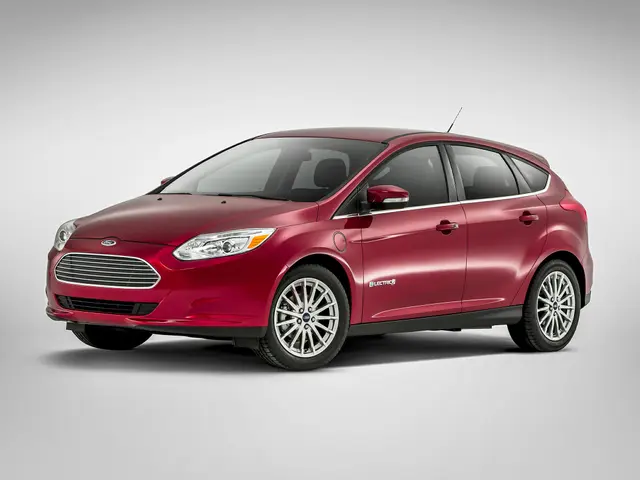
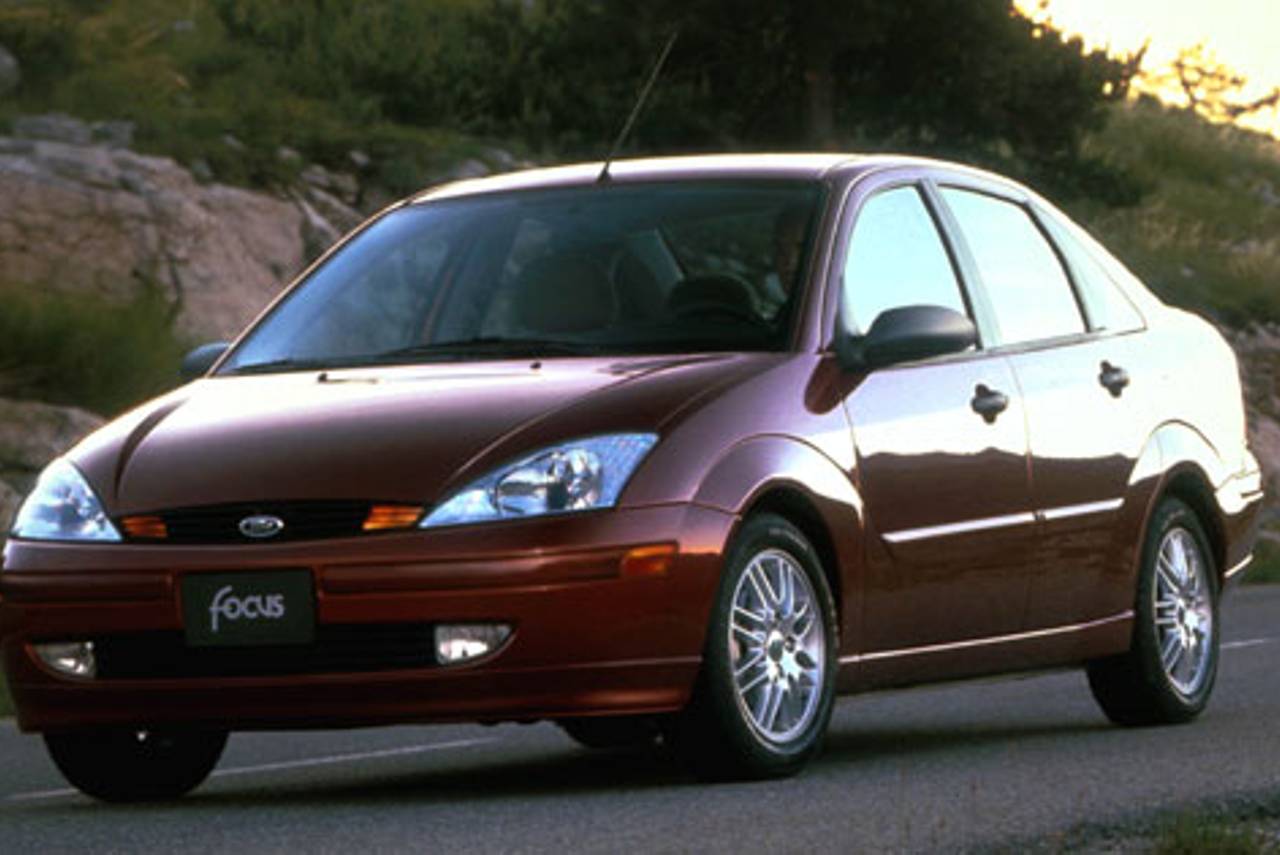
The Ford Focus was a game-changer for Ford’s compact car lineup when it launched in the US for the 2000 model year, offering a blend of practicality, efficiency, and modern styling. Despite its simpler electrical system compared to today’s vehicles, the Focus still relies on fuses and relays to protect its wiring from electrical faults, power surges, and short circuits.
If you’re experiencing issues like non-working headlights, a dead radio, or malfunctioning wipers on your 2000–2004 Focus, a blown fuse or faulty relay is often the cause. Knowing where to find your Focus’s fuse boxes and how to safely access them can help you resolve many common electrical problems without a costly trip to the mechanic.
This guide covers the fuse box and relay locations for the 2000–2004 Ford Focus (US), along with practical tips for safe access and fuse identification.
MUST READ: DYI – How to Check Car Fuses?
(2000-2004) Ford Focus (US) fuse box and relay with Diagram
WARNING
- Never replace a fuse with one that has a higher amperage rating.
- A fuse with a too-high amperage could damage the electrical part and cause a fire.
- On no account should fuses be repaired (e.g. patched up with tin foil or wire) as this may cause serious damage elsewhere in the electrical circuit or cause a fire.
- If a fuse blows repeatedly, do not keep replacing it. Instead, have the cause for the repeated short circuit or overload tracked and fixed.
- Terminal and harness assignments for individual connectors will vary depending on vehicle equipment level, model, and market.
Ford Focus (US) (2000-2004) fuse assignment
Ford Focus (US) Year of production: 2000, 2001, 2002, 2003, 2004
Where Are the Fuse Boxes Located on the Ford Focus?
The 2000–2004 Ford Focus is equipped with two main fuse box locations: one in the engine compartment and one inside the cabin. This straightforward layout makes troubleshooting relatively easy once you’re familiar with where each box is located.
1. Engine Compartment Fuse Box
The primary fuse box is located in the engine bay, mounted near the battery on the driver’s side, close to the firewall.
How to access it:
- Open the hood and locate the black plastic cover near the battery.
- Unclip the retaining tabs along the edges of the cover, most versions use simple snap-lock clips that don’t require tools.
- Lift the cover straight up to reveal the fuses and relays inside.
This fuse box protects higher-amperage components such as the headlights, engine cooling fan, horn, and starter relay. Since this area is exposed to engine heat and road moisture, make sure the cover is properly reseated after inspection to prevent corrosion.
2. Interior Fuse Panel (Instrument Panel Fuse Box)
The cabin fuse box is located inside the vehicle, typically at the end of the dashboard on the driver’s side, near the door.
How to access it:
- Open the driver’s door and locate the small access panel at the end of the dashboard, near the door hinge area.
- Gently pull or unclip the cover, it’s usually secured with simple plastic retaining clips.
- Once removed, you’ll see the fuse layout along with a couple of small relays.
This panel controls interior circuits such as the radio, interior lighting, wipers, hazard warning lights, and power windows (on models so equipped). This is likely the fuse box you’ll need to check most often for everyday electrical troubleshooting.
3. Additional Relays Near the Battery
Aside from the main engine bay fuse box, a few standalone relays, such as the fuel pump relay or main relay, may be located separately near the battery or along the inner fender panel, rather than housed within the primary fuse box.
How to access them:
- Inspect the area around the battery and inner fender for small, individually mounted relays plugged into the wiring harness.
- These relays can typically be pulled straight out of their socket for inspection or replacement.
Since these relays aren’t always grouped with the main fuse box, a wiring diagram specific to your Focus’s engine type (Zetec or SPI) is helpful for confirming exact locations.
How to Identify the Right Fuse or Relay
The fuse box covers typically include a printed diagram, either on the inside of the lid or on a label near the fuse block, listing each fuse and relay by number, amperage rating, and function.
When troubleshooting:
- Identify the malfunctioning component (e.g., “wipers” or “hazard lights”) and match it to its corresponding number on the diagram.
- Confirm the amperage rating on the old fuse matches the replacement before installing a new one.
- For relays, use a wiring diagram to confirm the correct location and function, since relays can look similar despite controlling different systems.
If the printed diagram is missing, faded, or hard to read due to the vehicle’s age, refer to your owner’s manual or a verified fuse box diagram specific to your Focus’s model year and trim, as slight differences can exist between LX, SE, ZX3, and other trims.
Safety Precautions Before Checking Fuses or Relays
- Turn off the ignition and remove the key before touching any fuse or relay.
- For more involved electrical work, disconnect the negative battery terminal to prevent accidental short circuits.
- Use a fuse puller tool or needle-nose pliers rather than metal screwdrivers, which can cause sparking.
- Never replace a fuse with one of a higher amperage rating than specified, as this can overload the circuit and create a fire hazard.
- If a replacement fuse blows immediately, stop and inspect the circuit for an underlying short rather than continuing to swap fuses.
- Given the age of this vehicle, inspect fuse box connectors and relay sockets for corrosion or brittle plastic, which is common after two decades of service.
Checking and Replacing Fuses in Ford Focus (US)
If electrical components in the vehicle are not working, a fuse may have blown. Blown fuses are identified by a broken wire within the fuse. Check the appropriate fuses before replacing any electrical components. To remove a fuse use the fuse puller tool provided on the fuse panel cover.
Location of Fuse Boxes
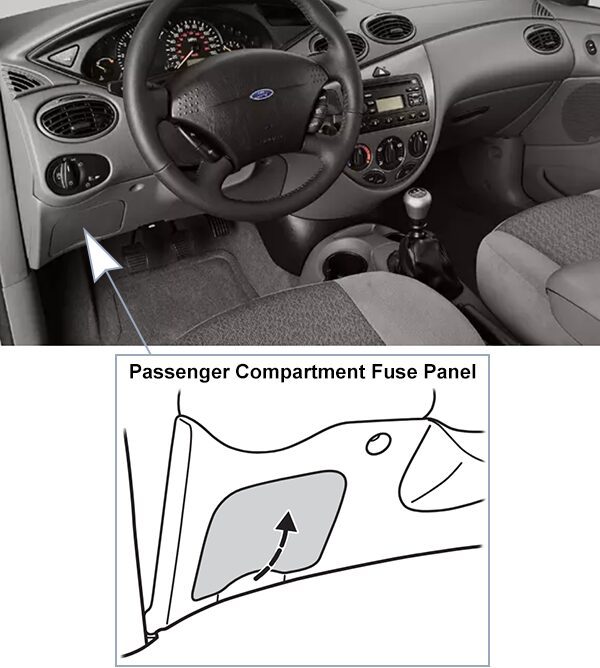
Passenger Compartment Fuse Panel:
The fuse panel is located below and to the left of the steering wheel by the brake pedal. Remove the panel cover to access the fuses.
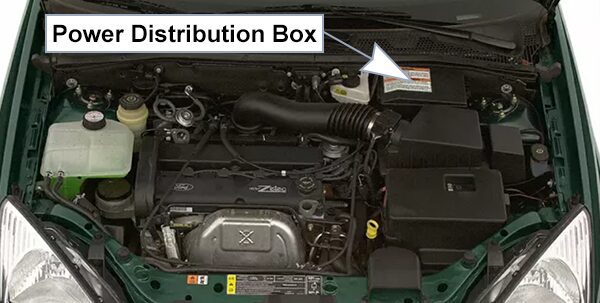
Power Distribution Box:
The power distribution box is located in the engine compartment. The power distribution box contains high-current fuses that protect your vehicle’s main electrical systems from overloads.
Fuse Box Diagrams
2000
Passenger Compartment Fuse Panel
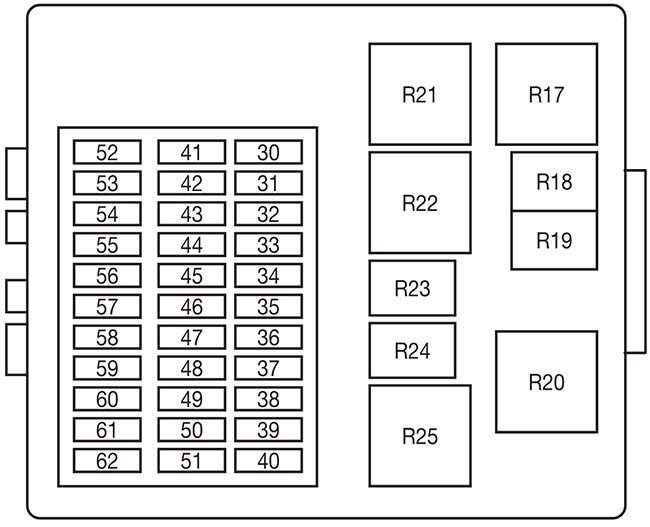
List of fuses in the passenger compartment fuse panel (2000)
| № | A | Description |
|---|---|---|
| 30 | 7.5A | ABS |
| 31 | 15A | Radio |
| 32 | 10A | Light switch |
| 33 | 15A | Hazard flasher |
| 34 | 20A | Horn |
| 35 | 7.5A | Interior lamps, power mirrors |
| 36 | 7.5A | Central timer, electronic modules |
| 37 | – | Not used |
| 38 | – | Not used |
| 39 | 10A | Back-up lamps |
| 40 | – | Not used |
| 41 | – | Not used |
| 42 | – | Not used |
| 43 | 15A | Rear wiper |
| 44 | 20A | Fog lamps |
| 45 | – | Not used |
| 46 | 15A | Cigar lighter |
| 47 | 7.5A | Side lights (left) |
| 48 | 7.5A | Side lights (right) |
| 49 | 25A | Rear defrost |
| 50 | 7.5A | Radio, central timer |
| 51 | – | Not used |
| 52 | – | Not used |
| 53 | 10A | Back-up lamps |
| 54 | 15A | Brake lamps |
| 55 | 20A | Front wipers |
| 56 | 25A | Front power Windows |
| 57 | 25A | Rear power Windows |
| 58 | 7.5A | Air conditioning, recirculated air |
| 59 | 7.5A | Electronic modules, instrument cluster |
| 60 | 7.5A | Air bag module |
| 61 | 7.5A | Light switch |
| 62 | – | Not used |
| 63 | 20A | Central lock module (on back side of fuse panel) |
| Relay | ||
| 17 | Starter | |
| 18 | Rear intermittent wiper (may be incorporated with relay 19) | |
| 19 | Front intermittent wiper (may be incorporated with relay 18) | |
| 20 | Not used | |
| 21 | Not used | |
| 22 | Not used | |
| 23 | Horn | |
| 24 | Battery saver | |
| 25 | Rear defrost | |
Power Distribution Box
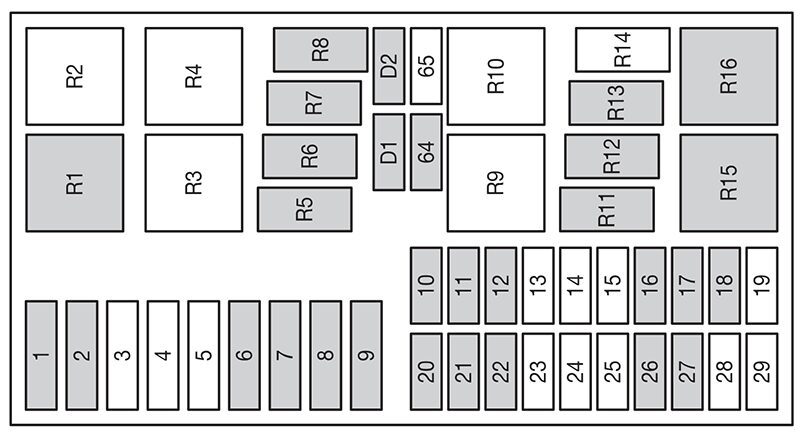
List of fuses in the power distribution box (2000)
| № | A | Description |
|---|---|---|
| 1 | 40A | Main power supply to electrical System |
| 2 | 30A | Engine cooling fan (A/C) 2nd fuse |
| 3 | – | Not used |
| 4 | – | Not used |
| 5 | – | Not used |
| 6 | 50A | Engine cooling fan (A/C) lst fuse |
| 7 | 40A | Main power supply to electrical System |
| 8 | 30A | Ignition |
| 9 | 20A | Engine management |
| 10 | 10A | Battery voltage sensor, diagnostic plug |
| 11 | 30A | ABS |
| 12 | 15A | Fuel pump |
| 13 | – | Not used |
| 14 | – | Not used |
| 15 | – | Not used |
| 16 | 10A | Low beam (left side) |
| 17 | 10A | Low beam (right side) |
| 18 | 10A | Heated oxygen sensors |
| 19 | – | Not used |
| 20 | 10A | Engine management |
| 21 | 20A | ABS |
| 22 | 20A | DRL (low beams) |
| 23 | – | Not used |
| 24 | – | Not used |
| 25 | – | Not used |
| 26 | 10A | High beam (left side) |
| 27 | 10A | High beam (right side) |
| 28 | – | Not used |
| 29 | – | Not used |
| 64 | 30A | Heater blower motor |
| 65 | – | Not used |
| Relay | ||
| 1 | Ignition | |
| 2 | Not used | |
| 3 | Not used | |
| 4 | Not used | |
| 5 | High beams | |
| 6 | Low beams | |
| 7 | Fuel pump | |
| 8 | Engine management | |
| 9 | Not used | |
| 10 | Not used | |
| 11 | Air conditioning | |
| 12 | Daytime running lights | |
| 13 | Fog lamps | |
| 14 | Not used | |
| 15 | Engine cooling fan level 2 (A/C) | |
| 16 | Engine cooling fan level 1 | |
2001
Passenger Compartment Fuse Panel
List of fuses in the passenger compartment fuse panel (2001)
| № | A | Description |
|---|---|---|
| 30 | 7.5 | ABS |
| 31 | 15 | Radio |
| 32 | 10 | Light switch |
| 33 | 15 | Hazard ílasher |
| 34 | 20 | Horn |
| 35 | 7.5 | Interior lamps, power mirrors |
| 36 | 7.5 | Central timer, electronic modules |
| 37 | – | Not used |
| 38 | – | Not used |
| 39 | 10 | Back-up lamps |
| 40 | – | Not used |
| 41 | – | Not used |
| 42 | – | Not used |
| 43 | 15 | Rear wiper |
| 44 | 20 | Fog lamps |
| 45 | – | Not used |
| 46 | 15 | Cigar lighter |
| 47 | 7.5 | Side lights (left) |
| 48 | 7.5 | Side lights (right) |
| 49 | 25 | Rear defrost |
| 50 | 7.5 | Radio, central timer |
| 51 | – | Not used |
| 52 | – | Not used |
| 53 | 10 | Back-up lamps |
| 54 | 15 | Brake lamps |
| 55 | 20 | Front wipers |
| 56 | 25 | Front power Windows |
| 57 | 25 | Rear power Windows |
| 58 | 7.5 | Air conditioning, recirculated air |
| 59 | 7.5 | Electronic modules, instrument cluster |
| 60 | 7.5 | Air bag module |
| 61 | 7.5 | Light switch |
| 62 | – | Not used |
| 63 | 20 | Central lock module (on back side of fuse panel) |
| Relay | ||
| 17 | Starter | |
| 18 | Rear intermittent wiper (may be incorporated with relay 19) | |
| 19 | Front intermittent wiper (may be incorporated with relay 18) | |
| 20 | Not used | |
| 21 | Not used | |
| 22 | Not used | |
| 23 | Horn | |
| 24 | Battery saver | |
| 25 | Rear defrost | |
Power Distribution Box
List of fuses in the power distribution box (2001)
| № | A | Description |
|---|---|---|
| 1 | 40A | Main power supply to electrical system |
| 2 | 30A | Engine cooling fan (A/C) 2nd fuse |
| 3 | – | Not used |
| 4 | – | Not used |
| 5 | – | Not used |
| 6 | 50A | Engine cooling fan (A/C) lst fuse |
| 7 | 40A | Main power supply to electrical system |
| 8 | 30A | Ignition |
| 9 | 20A | Engine management |
| 10 | 10A | Battery voltage sensor, diagnostic plug |
| 11 | 30A | ABS |
| 12 | 15A | Fuel pump |
| 13 | – | Not used |
| 14 | – | Not used |
| 15 | – | Not used |
| 16 | 10A | Low beam (left side) |
| 17 | 10A | Low beam (right side) |
| 18 | 10A | Heated oxygen sensors |
| 19 | – | Not used |
| 20 | 10A | Engine management |
| 21 | 20A | ABS |
| 22 | 20A | DRL (low beams) |
| 23 | – | Not used |
| 24 | – | Not used |
| 25 | – | Not used |
| 26 | 10A | High beam (left side) |
| 27 | 10A | High beam (right side) |
| 28 | – | Not used |
| 29 | – | Not used |
| 64 | 30A | Heater blower motor |
| 65 | – | Not used |
| Relay | ||
| 1 | Ignition | |
| 2 | Not used | |
| 3 | Not used | |
| 4 | Not used | |
| 5 | High beams | |
| 6 | Low beams | |
| 7 | Fuel pump | |
| 8 | Engine management | |
| 9 | Not used | |
| 10 | Not used | |
| 11 | Air conditioning | |
| 12 | Daytime running lights | |
| 13 | Fog lamps | |
| 14 | Stop lamp inhibit relay (AdvanceTrac only) | |
| 15 | Engine cooling fan level 2 (A/C) | |
| 16 | Engine cooling fan level 1 | |
2002
Passenger Compartment Fuse Panel
List of fuses in the passenger compartment fuse panel (2002)
| № | A | Description |
|---|---|---|
| R17 | – | Starter relay |
| R18 | – | Rear intermittent relay |
| R19 | – | Front wiper intermittent relay |
| R20 | – | Not used |
| R21 | – | Not used |
| R22 | – | Not used |
| R23 | – | Horn relay |
| R24 | – | Battery saver relay |
| R25 | – | Rear defrost relay |
| 30 | 10A | Light switch |
| 31 | 15A | Radio |
| 32 | 15A | Turn signal |
| 33 | 20A | Horn, Power seats (SVT only) |
| 34 | 20A | Power sunroof |
| 35 | 7.5A | Interior lamps, Power mirrors |
| 36 | 7.5A | A/C switch, Hazard flasher, Instrument cluster |
| 37 | – | Not used |
| 38 | – | Not used |
| 39 | – | Not used |
| 40 | 10A | Backup lamps (automatic transaxle) |
| 41 | 7.5A | Radio and cluster (accessory) |
| 42 | 15A | Stop lamps |
| 43 | 15A | Rear wiper |
| 44 | 20A | Fog lamps |
| 45 | 7.5A | Recirculated air, Air conditioning |
| 46 | 7.5A | Anti-lock Brake System (ABS) |
| 47 | 20A | Cigar lighter, Rear power point (SVT only) |
| 48 | 10A | Data link connector |
| 49 | 25A | Rear defroster |
| 50 | 7.5A | Heated mirror, Heated backlite indicator |
| 51 | – | Not used |
| 52 | 15A | Heated seats |
| 53 | 10A | Backup lamps (manual transaxle) |
| 54 | 25A | Rear power Windows |
| 55 | 25A | Front power Windows |
| 56 | 20A | Front wipers |
| 57 | 7.5A | Position and side lights (right) |
| 58 | 7.5A | Position and side lights (left) |
| 59 | 7.5A | Light switch (headlamps) |
| 60 | 7.5A | Air bag module |
| 61 | 7.5A | PATS modules, Instrument cluster |
| 62 | 7.5A | License plate lamp |
| 63 | 20A | Power locks (GEM) (Fuse 63 is located on the back of the fuse panel. See your dealer or a certified technician for service of this fuse.) |
Power Distribution Box
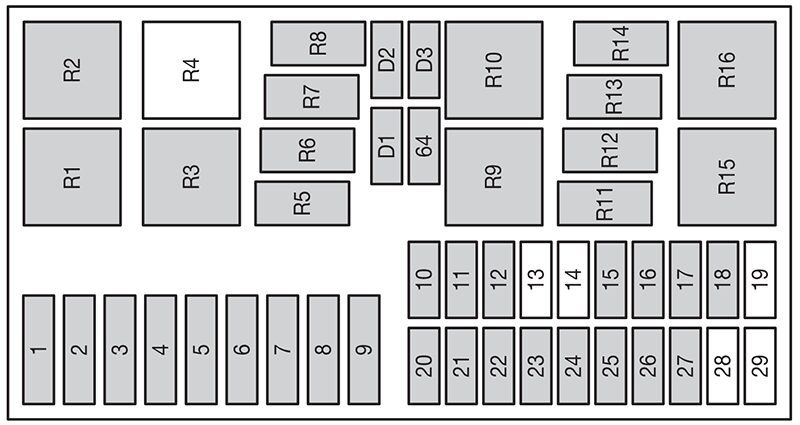
List of fuses in the power distribution box (2002)
| № | A | Description |
|---|---|---|
| 1 | 40A | Main power supply to electrical system |
| 2 | 30A | Engine cooling fan (A/C) 2nd fuse |
| 3 | 30A | Cooling fan (2.0L engine only) |
| 4 | 30A | Air pump motor |
| 5 | 30A | Cooling fan 2 (2.0L engine only) |
| 6 | 50A | Engine cooling fan (A/C) lst fuse |
| 7 | 40A | Main power supply to electrical system |
| 8 | 30A | Ignition switch, Starter |
| 9 | 20A | Engine management |
| 10 | 10A (2.0L engine only) | Battery voltage sensor |
| 1A (2.3L engine only) | ||
| 11 | 30A | Anti-lock Brake System (ABS) |
| 12 | 15A | Fuel pump |
| 13 | – | Not used |
| 14 | – | Not used |
| 15 | 10A | A/C clutch solenoid |
| 16 | 10A | Low beam (left side – conventional headlamps) |
| 15A | Low beam (left side – HID headlamps) | |
| 17 | 10A | Low beam (right side – conventional headlamps) |
| 15A | Low beam (right side – HID headlamps) | |
| 18 | 10A (2.0L engine only) | Heated oxygen sensors |
| 15A (2.3L engine only) | ||
| 19 | – | Not used |
| 20 | 10A | Engine module |
| 21 | 20A | ABS |
| 22 | 20A | Low beam (DRL) |
| 23 | – | Not used |
| 24 | 30A | Subwoofer |
| 25 | – | Not used |
| 26 | 10A | High beam (left) |
| 27 | 10A | High beam (right) |
| 28 | – | Not used |
| 29 | – | Not used |
| 64 | 40A | Heater blower motor |
| R1 | – | Ignition relay |
| R2 | – | Air pump motor relay |
| R3 | – | Cooling fan (Run-on fan) relay (2.3L engine only) |
| R4 | – | Not used |
| R5 | – | High beams relay |
| R6 | – | Low beams relay |
| R7 | – | Fuel pump relay |
| R8 | – | Engine management relay |
| R9 | – | Cooling fan relay (2.0L engine only) |
| R10 | – | Cooling fan 2 relay (2.0L engine only) |
| R11 | – | Air conditioning relay |
| R12 | – | Daytime Running Lamps (DRL) relay |
| R13 | – | Fog lamps relay |
| R14 | – | HID lamps (SVT only) |
| R15 | – | Cooling fan high speed (A/C only) relay (2.0L engine only) |
| R16 | – | Cooling fan low speed relay |
| D1 | – | PCM diode |
| D2 | – | Cooling fan diode |
| D3 | – | A/C clutch diode |
2003
Passenger Compartment Fuse Panel
List of fuses in the passenger compartment fuse panel (2003)
| № | A | Description |
|---|---|---|
| R17 | – | Starter relay |
| R18 | – | Rear intermittent relay |
| R19 | – | Front wiper intermittent relay |
| R20 | – | Not used |
| R21 | – | Not used |
| R22 | – | Decklid/Liftgate release relay |
| R23 | – | Horn relay |
| R24 | – | Battery saver relay |
| R25 | – | Rear defrost relay |
| 30 | 10A | Light switch |
| 31 | 15A | Radio |
| 32 | 15A | Turn signal |
| 33 | 20A | Horn, Power seats (SVT only) |
| 34 | 20A | Power sunroof |
| 35 | 7.5A | Interior lamps, Power mirrors |
| 36 | 7.5A | A/C switch, Hazard flasher, Instrument cluster |
| 37 | 25A | Decklid/Liftgate release |
| 38 | – | Not used |
| 39 | – | Not used |
| 40 | 10A | Backup lamps (automatic transaxle) |
| 41 | 7.5A | Radio and cluster (accessory) |
| 42 | 15A | Stop lamps |
| 43 | 15A | Rear wiper |
| 44 | 20A | Fog lamps |
| 45 | 7.5A | Recirculated air, Air conditioning |
| 46 | 7.5A | Anti-lock Brake System (ABS) |
| 47 | 20A | Cigar lighter, Rear power point (SVT only) |
| 48 | 10A | Data link connector |
| 49 | 25A | Rear defroster |
| 50 | 7.5A | Heated mirror, Heated backlite indicator |
| 51 | – | Not used |
| 52 | 15A | Heated seats |
| 53 | 10A | Backup lamps (manual transaxle) |
| 54 | 25A | Rear power Windows |
| 55 | 25A | Front power Windows |
| 56 | 20A | Front wipers |
| 57 | 7.5A | Position and side lights (right) |
| 58 | 7.5A | Position and side lights (left) |
| 59 | 7.5A | Light switch (headlamps) |
| 60 | 7.5A | Air bag module |
| 61 | 7.5A | PATS modules, Instrument cluster |
| 62 | 7.5A | License plate lamp |
| 63 | 20A | Power locks (GEM) (Fuse 63 is located on the back of the fuse panel. See your dealer or a certified technician for service of this fuse.) |
Power Distribution Box
List of fuses in the power distribution box (2003)
| № | A | Description |
|---|---|---|
| 1 | 40A | Main power supply to electrical system |
| 2 | 30A | Engine cooling fan (A/C) 2nd fuse |
| 3 | 30A | Cooling fan (2.0L engine only) |
| 4 | 30A | Air pump motor |
| 5 | 30A | Cooling fan 2 (2.0L engine only) |
| 6 | 50A | Engine cooling fan (A/C) lst fuse |
| 7 | 40A | Main power supply to electrical system |
| 8 | 30A | Ignition switch, Starter |
| 9 | 20A | Engine management |
| 10 | 10A (2.0L engine only) | Battery voltage sensor |
| 1A (2.3L engine only) | ||
| 11 | 30A | Anti-lock Brake System (ABS) |
| 12 | 15A | Fuel pump |
| 13 | – | Not used |
| 14 | – | Not used |
| 15 | 10A | A/C clutch solenoid |
| 16 | 10A | Low beam (left side – conventional headlamps) |
| 15A | Low beam (left side – HID headlamps) | |
| 17 | 10A | Low beam (right side – conventional headlamps) |
| 15A | Low beam (right side – HID headlamps) | |
| 18 | 10A (2.0L engine only) | Heated oxygen sensors |
| 15A (2.3L engine only) | ||
| 19 | – | Not used |
| 20 | 10A | Engine module |
| 21 | 20 A | ABS |
| 22 | 20 A | Low beam (DRL) |
| 23 | – | Not used |
| 24 | 30A | Subwoofer |
| 25 | – | Not used |
| 26 | – | Not used |
| 27 | 15A | High beams (right and left) |
| 28 | – | Not used |
| 29 | 10A | Cooling fan (2.3L engine only) |
| 64 | 40A | Heater blower motor |
| R1 | – | Ignition relay |
| R2 | – | Air pump motor relay (2.3L engine only) |
| R3 | – | Cooling fan (Run-on fan) relay (2.3L engine only) |
| R4 | – | Not used |
| R5 | – | High beams relay |
| R6 | – | Low beams relay |
| R7 | – | Fuel pump relay |
| R8 | – | Engine management relay |
| R9 | – | Cooling fan relay (2.0L engine only) |
| R10 | – | Cooling fan 2 relay (2.0L engine only) |
| R11 | – | Air conditioning relay |
| R12 | – | Daytime Running Lamps (DRL) relay |
| R13 | – | Fog lamps relay |
| R14 | – | HID lamps (SVT only) |
| R15 | – | Cooling fan high speed (A/C only) relay (2.0L engine only) |
| R16 | – | Cooling fan low speed relay |
| D1 | – | PCM diode |
| D2 | – | Cooling fan diode |
| D3 | – | A/C clutch diode |
Conclusion
Knowing the fuse box and relay locations on your 2000–2004 Ford Focus makes it much easier to handle minor electrical issues without unnecessary guesswork. With two main fuse box locations, one under the hood and one inside the cabin, plus a few standalone relays near the battery, this classic Focus is relatively simple to troubleshoot once you’re familiar with its layout.
Always handle fuses and relays with care, confirm amperage ratings before replacing any component, and use the printed diagram or a wiring reference to correctly identify each fuse or relay. If an electrical issue persists after replacing a fuse, or if you notice significant wear on the fuse box connectors, consulting a mechanic experienced with older Ford Focus models is a smart next step.