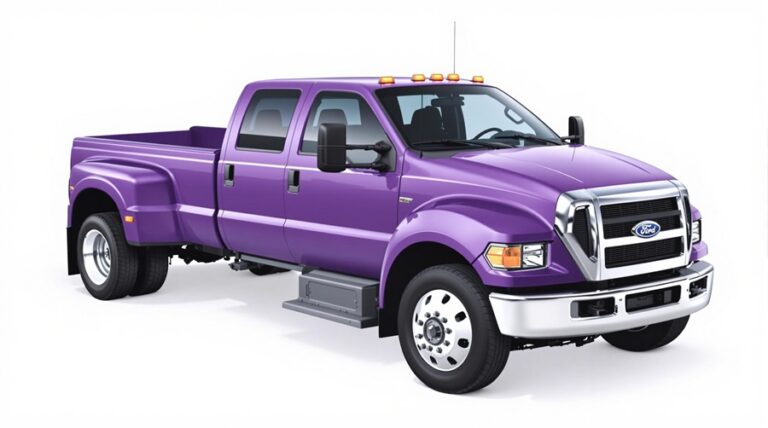
Learn about Ford F-250 / F-350 (1992-1997) fuse box and relay’s locations, functions, and maintenance tips for optimal vehicle electrical system.
The 1992–1997 Ford F-250 and F-350 trucks—often referred to by enthusiasts as the “OBS” (Old Body Style) generation—use a simpler electrical system compared to modern trucks, but fuses and relays still play a critical role in protecting your vehicle’s wiring. These components prevent electrical overloads from damaging sensitive circuits, lights, and accessories.
If you’re dealing with a dead radio, non-functioning dash lights, or a turn signal that won’t blink, there’s a good chance a blown fuse or faulty relay is to blame. Knowing exactly where the fuse box and relays are located on your classic Super Duty can save you a trip to the mechanic and help you fix minor issues yourself.
This guide breaks down the fuse box location, relay placement, and safe access methods for the 1992–1997 Ford F-250 and F-350 trucks.
MUST READ: DYI – How to Check Car Fuses?
(1992-1997) Ford F-250 / F-350 fuse box and relay with Diagram
WARNING
- Never replace a fuse with one that has a higher amperage rating.
- A fuse with a too-high amperage could damage the electrical part and cause a fire.
- On no account should fuses be repaired (e.g. patched up with tin foil or wire) as this may cause serious damage elsewhere in the electrical circuit or cause a fire.
- If a fuse blows repeatedly, do not keep replacing it. Instead, have the cause for the repeated short circuit or overload tracked and fixed.
- Terminal and harness assignments for individual connectors will vary depending on vehicle equipment level, model, and market.
Ford F-250 / F-350 (1992-1997) fuse assignment
Ford F-250 / F-350 Year of production: 1992, 1993, 1994, 1995, 1996, 1997
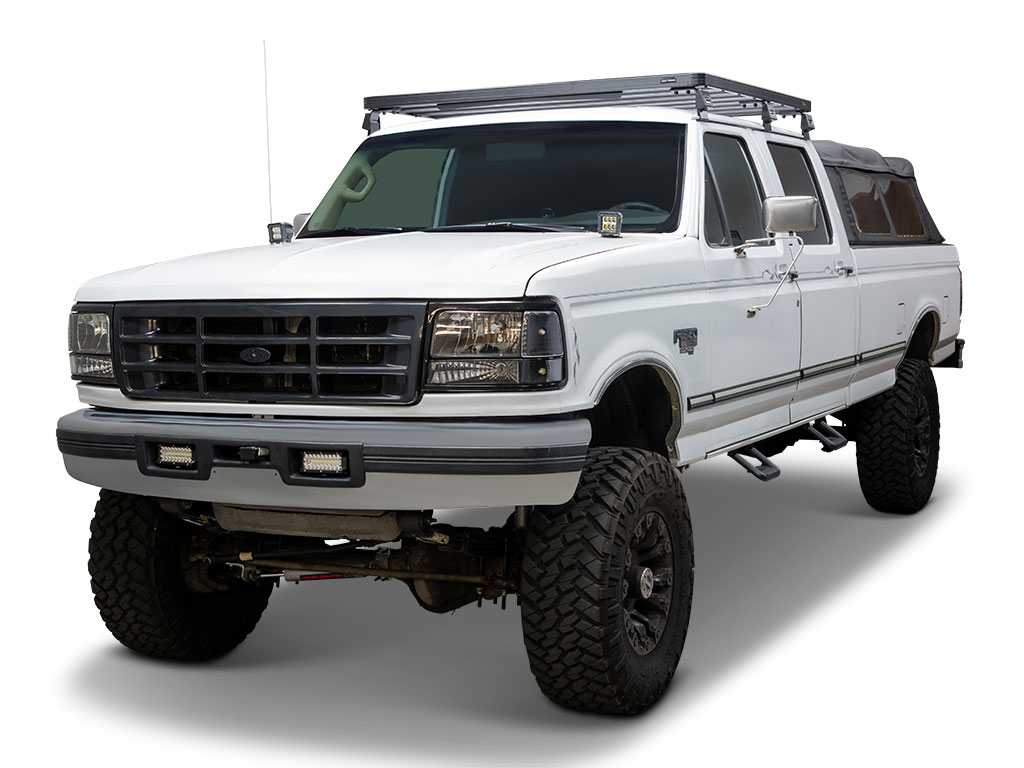
Where Is the Fuse Box Located on the 1992–1997 Ford F-250/F-350?
Unlike newer trucks with multiple fuse boxes and computerized junction boxes, these older Super Duty models rely on a straightforward setup: one main fuse panel inside the cabin and a handful of relays mounted in the engine bay.
1. Interior Fuse Panel (Under the Dashboard)
The primary fuse box is located under the dashboard, on the driver’s side, just above the pedals and to the left of the steering column.
How to access it:
- Sit in the driver’s seat and look underneath the dash near the kick panel area.
- The fuse panel cover may be a simple flip-down door or a flat panel held by one or two screws, depending on trim level and production year.
- Open or remove the cover to expose the fuse block.
This panel houses fuses for the interior lights, radio, wipers, turn signals, gauge cluster, and heater/blower motor. Since this is the fuse box you’ll access most often, it’s worth familiarizing yourself with its layout early on.
2. Engine Bay Relays
Rather than a centralized power distribution box like later Super Duty models, the 1992–1997 trucks use individual relays mounted directly in the engine compartment, often near the firewall or fender wells.
Common relay locations include:
- Horn relay – typically mounted near the firewall, driver’s side.
- Starter relay – usually found on the inner fender or near the battery.
- Blower motor relay – often located near the heater box on the firewall.
- Headlight relay (on trucks equipped with one) – generally near the battery or front of the engine bay.
How to access them:
- Open the hood and visually inspect near the firewall and battery area.
- Relays are typically small, black, square or rectangular boxes plugged into a wiring harness, no cover removal is required, though some may be tucked behind wiring or brackets.
- Gently pull straight up or use light side-to-side pressure to remove a relay for inspection or replacement.
Because these relays aren’t grouped into a single labeled box, a factory service manual or wiring diagram is especially helpful for confirming exact locations, since placement can vary slightly depending on engine type (gas V8 or Power Stroke diesel) and production year.
3. In-Line Fuses
In addition to the main fuse panel, some circuits on these trucks such as accessory wiring, aftermarket add-ons, or specific lighting circuits, may use in-line fuse holders spliced directly into the wiring harness rather than housed in the main panel. These are commonly found behind the dashboard, near the firewall, or under the hood along the wiring harness.
If a component isn’t covered by the main fuse panel and doesn’t seem to have a dedicated relay, check along the harness for a small in-line fuse holder.
How to Identify the Right Fuse or Relay
The underside of the fuse panel cover (or the panel itself) usually includes a printed legend showing fuse amperage ratings and which circuits they protect. Since these trucks predate more detailed labeling systems used in later models, the legend may be brief, listing general categories like “Gauges,” “Radio,” or “Turn Signal” rather than specific component names.
When troubleshooting:
- Match the malfunctioning component to the closest labeled circuit on the fuse panel.
- Use a test light or multimeter to confirm which fuse has blown if the labeling is unclear or worn off.
- For relays, cross-reference their location and function using a wiring diagram specific to your engine and trim, since gas and diesel models may differ slightly.
Safety Precautions Before Checking Fuses or Relays
Before working on the fuse panel or engine bay relays, keep these safety tips in mind:
- Turn off the ignition and remove the key before touching any fuse or relay.
- For more involved diagnostics, disconnect the negative battery terminal to prevent short circuits, especially when working near the starter relay or battery.
- Use a fuse puller or needle-nose pliers to remove old fuses, avoid metal screwdrivers, which can cause sparking.
- Always replace a fuse with one of the same amperage rating. Using a higher-rated fuse can damage wiring or create a fire risk.
- If a newly installed fuse blows right away, stop and inspect the circuit for a short rather than continuing to replace fuses.
- Given the age of these trucks, inspect wiring and relay connectors for corrosion or brittle insulation, which is common after decades of service.
Checking and Replacing Fuses in Ford F-250 / F-350
If electrical parts in your vehicle are not working, the system may have been overloaded and blown a fuse or tripped a circuit breaker. Before you replace or repair any electrical parts, check the appropriate fuses or circuit breakers.
If you need to check a fuse, follow these steps:
- In order to find the fuse panel, you must first remove the cover from the lower edge of the instrument panel. You can do this by pulling on handle to disengage the fasteners.
- On the fuse panel cover, find the number of the fuse you want to check. The diagram on the cover tells you where to locate the fuse on the panel. The underside of the cover also contains a fuse pulling tool in case you need to replace a blown fuse.
- Check the fuse to see if it is blown. Look through the clear side of the fuse to see if the metal wire inside is separated. If it is, the fuse is blown and should be replaced.
Even after you replace a fuse, it may continue to blow if you do not find what caused the overload. If the fuse continues to blow, have your electrical system checked.
Location of Fuse Boxes
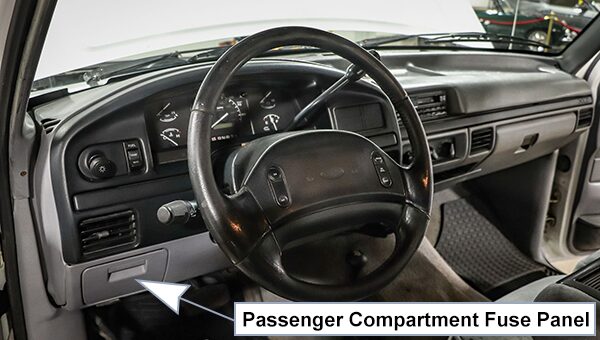
Passenger Compartment Fuse Panel:
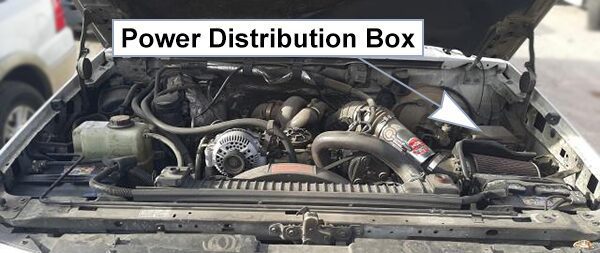
Power Distribution Box:
Fuse Box Diagrams
1996
Passenger Compartment Fuses
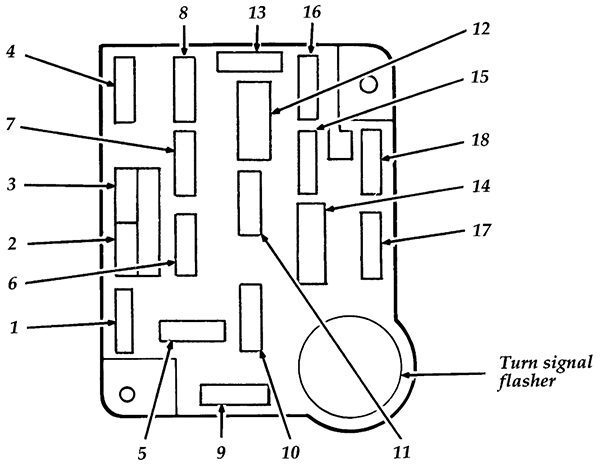
List of fuses in the passenger compartment fuse panel (1996)
| № | A | Description |
|---|---|---|
| 1 | 30A | Heater / Air conditioner blower |
| 2 | 30A | Wiper / Washer |
| 3 | 3A | Idle position switch (Diesel) |
| 4 | 15A | Exterior lamps, Instrument illumination, Trailer exterior lamp relay, Waming buzzer/chime module |
| 5 | 10A | Air bag restraint |
| 6 | 15A | Air conditioner clutch, Diesel auxiliary fuel selector, Remote keyless entry |
| 7 | 15A | Turn lamps |
| 8 | 15A | Courtesy / dome/cargo lamps, Electric outside mirrors, Keyless entry, Speedometer, Sun visor mirror illumination, Waming buzzer / chime module |
| 9 | 25A | Powerpoint |
| 10 | 4A | Instrument illumination |
| 11 | 15A | Radio, Radio display dimmer |
| 12 | 20A Circuit Breaker | Electronic shift motor 4-wheel drive, Power door locks, Power driver seat, Power lumbar |
| 13 | 15A | Anti-lock brakes, Brake shift interlock, Electronic engine control, Speed control, Stop / hazard lamps, Stop sense for electronic engine control |
| 14 | 20A Circuit Breaker | Power Windows |
| 15 | 20A | Anti-lock brakes |
| 16 | 15A | Cigarette lighter, Generic Scan Tool |
| 17 | 10A | Diesel indicators, Electronic transmission, Gauges, Tachometer, Waming buzzer / chime module, Waming indicators |
| 18 | 10A | Air bag restraint, Automatic day / night mirror, Brake shift interlock, Electronic shift module 4-wheel drive, Speedometer, Selectable RPM control (Diesel), Speed control (Diesel) |
Power Distribution Box
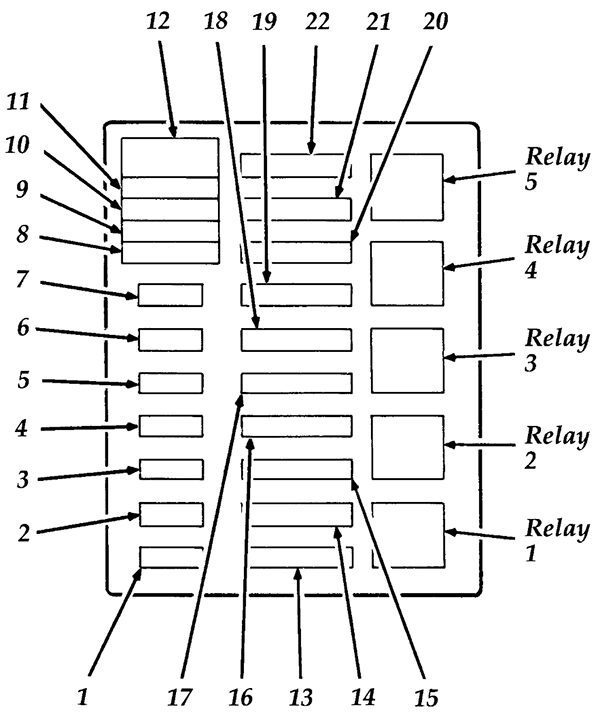
List of fuses in the power distribution box (1996)
| № | A | Description |
|---|---|---|
| 1 | 20A | Audio power |
| 2 | (15A) | Fog lamps, 200 Amp alternator (Diesel ambulance only) |
| 3 | 30A | Daytime running lamps (Canada only), Headlamp flash-to-pass, Horn |
| 4 | 25A | Trailer back-up lamps, Trailer running lamps |
| 5 | 15A | Back-up lamps, Daytime running lamp module (DRL) (Canada only), Oxygen sensor heater, Trailer battery charge relay |
| 6 | 10A | Trailer right-hand stop/turn lamp |
| 7 | 10A | Trailer left-hand stop/turn lamp |
| 8 | 30A maxi | Injector driver module |
| 9 | 30A (Gas) 20A (Diesel) | Powertrain control system |
| 10 | 20A maxi | Instrument panei fuses: 15, 18; Starter relay coil |
| 11 | – | Not used |
| 12 | Diode | Powertrain control system relay coil |
| 13 | 50A maxi | Instrument panei fuses: 5, 9, 13 |
| 14 | – | Not used |
| 15 | 50A maxi | Instrument panei fuses: 1, 7; Power distribution box: fuse 5 |
| 16 | 20A maxi | Fuel pump feed (Gas engine) |
| 17 | 50A maxi | Altemator charge lamp, Idle position switch (Diesel), Instrument panei fuses: 2, 6, 11, 14, 17; Power distribution box: fuse 22 |
| 18 | 30A maxi | Trailer battery charge |
| 19 | 40A maxi | Headlamps |
| 20 | 50A maxi | Instrument panei fuses: 4, 8, 12, 16 |
| 21 | 30A maxi | Trailer brake feed |
| 22 | 20A maxi (Gas) 30A (Diesel) | Distributor pickup (Gas engine), Fuel line heater (Diesel), Glow plug controller (Diesel), Ignition coil (Gas engine), Powertrain control system relay coil, Thick film integrated (TFI) module (Gas engine) |
| Relay 1 | Powertrain control system | |
| Relay 2 | Fuel pump (Gas engine), Injector driver module (IDM relay) (Diesel) | |
| Relay 3 | Horn | |
| Relay 4 | Trailer tow lamps |
Additional Fuses
| Circuit Protected | Size | Location |
|---|---|---|
| Headlamps & High Beam Indicator | 22A Circ. Brkr. | Integral with Headlamp Switch |
| Windshield Wiper and Washer Pump | 30A Fuse | Fuse Panei |
| Electric Brakes (Trailer) | 30A Maxi Fuse | Power Distribution Box |
| Trailer Lamps (Relay Feed) | 25A Fuse | Power Distribution Box |
| Altemator, 95 Amp | 12 Ga. Fuse Link | At Starting Motor Relay (Gasoline Engine) |
| Alternator, 130 Amp | (2) 12 Ga. Fuse Links | At Starting Motor Relay (Diesel Engine) |
| Powertrain Control Module | 20A Maxi Fuse | Power Distribution Box |
| Fuel Pump | 20A Maxi Fuse | Power Distribution Box |
| Headlamp Switch | 40A Maxi Fuse | Power Distribution Box |
| Diesel Glow Plugs | (2) 14 Ga. Fuse Links | At Starting Motor Relay |
| Power Windows | 20A C.B. | Fuse Panei |
| Power Door Locks | 20A C.B. | Fuse Panei |
| Hazard Flashers | 15A Fuse | Fuse Panei |
| Trailer Battery Recharge Feed | 30A Maxi Fuse | Power Distribution Box |
1997
Passenger Compartment Fuses
List of fuses in the passenger compartment fuse panel (1997)
| № | A | Description |
|---|---|---|
| 1 | 30A | Heater / Air conditioner blower |
| 2 | 30A | Wiper / Washer |
| 3 | 3A | Idle position switch (Diesel) |
| 4 | 15A | Exterior lamps, Instrument illumination, Trailer exterior lamp relay, Waming buzzer/chime module |
| 5 | – | Not used |
| 6 | 15A | Air conditioner clutch, Diesel auxiliary fuel selector, Remote keyless entry |
| 7 | 15A | Turn lamps |
| 8 | 15A | Courtesy / dome / cargo lamps, Electric outside mirrors, Keyless entry, Speedometer, Waming buzzer / chime module |
| 9 | 25A | Power point |
| 10 | 4A | Instrument illumination |
| 11 | 15A | Radio, Radio display dimmer |
| 12 | 20A Circuit Breaker | Power door locks, Power driver seat, Power lumbar |
| 13 | 15A | Anti-lock brakes, Brake shift interlock, Electronic engine control, Speed control, Stop / hazard lamps, Stop sense for electronic engine control |
| 14 | 20A Circuit Breaker | Power Windows |
| 15 | 20A | Anti-lock brakes |
| 16 | 15A | Cigarette lighter, Generic Scan Tool |
| 17 | 10A | Diesel indicators, Electronic transmission, Gauges, Tachometer, Wamingbuzzer / chime module, Waming indicators |
| 18 | 10A | Brake shift interlock, Speedometer, Selectable RPM control (Diesel), Speed control (Diesel) |
Power Distribution Box
List of fuses in the power distribution box (1997)
| № | A | Description |
|---|---|---|
| 1 | 20A | Audio power |
| 2 | 15A | 200 Amp alternator (Diesel ambulance only) |
| 3 | 30A | Daytime running lamps (Canada only), Headlamp flash-to-pass, Horn |
| 4 | 25A | Trailer back-up lamps, Trailer running lamps |
| 5 | 15A | Back-up lamps, Daytime running lamp module (DRL) (Canada only), Oxygen sensor heater, Trailer battery charge relay |
| 6 | 10A | Trailer right-hand stop/turn lamp |
| 7 | 10A | Trailer left-hand stop/turn lamp |
| 8 | 30A maxi | Injector driver module (Diesel) |
| 9 | 30A (Gas) 20A (Diesel) | Powertrain control system |
| 10 | 20A maxi | Instrument panei fuses: 15, 18; Starter relay coil |
| 11 | – | Not used |
| 12 | Diode | Powertrain control system relay coil |
| 13 | 50A maxi | Instrument panei fuses: 5, 9, 13 |
| 14 | – | Not used |
| 15 | 50A maxi | Instrument panei fuses: 1, 7; Power distribution box: fuse 5 |
| 16 | 20A maxi | Fuel pump feed (Gas engine) |
| 17 | 50A maxi | Altemator charge lamp, Idle position switch (Diesel), Instrument panei fuses: 2, 6, 11, 14, 17; Power distribution box: fuse 22 |
| 18 | 30A maxi | Trailer battery charge |
| 19 | 40A maxi | Headlamps |
| 20 | 50A maxi | Instrument panei fuses: 4, 8, 12, 16 |
| 21 | 30A maxi | Trailer brake feed |
| 22 | 20A maxi (Gas) 30A (Diesel) | Distributor pickup (Gas engine), Fuel line heater (Diesel), Glow plug controller (Diesel), Ignition coil (Gas engine), Powertrain control system relay coil, Thick film integrated (TFI) module (Gas engine) |
| Relay 1 | Powertrain control system | |
| Relay 2 | Fuel pump (Gas engine), Injector driver module (IDM relay) (Diesel) | |
| Relay 3 | Horn | |
| Relay 4 | Trailer tow lamps | |
| Relay 5 | Not used |
Additional Fuses
| Circuit Protected | Size | Location |
|---|---|---|
| Headlamps & High Beam Indicator | 22A Circ. Brkr. | Integral with Headlamp Switch |
| Windshield Wiper and Washer Pump | 30A Fuse | Fuse Panei |
| Electric Brakes (Trailer) | 30A Maxi Fuse | Power Distribution Box |
| Trailer Lamps (Relay Feed) | 25A Fuse | Power Distribution Box |
| Altemator, 95 Amp | 12 Ga. Fuse Link | At Starting Motor Relay (Gasoline Engine) |
| Alternator, 130 Amp | (2) 12 Ga. Fuse Links | At Starting Motor Relay (Diesel Engine) |
| Powertrain Control Module | 20A (Diesel) 30A (Gasoline) | Power Distribution Box |
| Fuel Pump | 20A Maxi Fuse | Power Distribution Box |
| Headlamp Switch | 40A Maxi Fuse | Power Distribution Box |
| Diesel Glow Plugs | (2) 14 Ga. Fuse Links | At Starting Motor Relay |
| Power Windows | 20A C.B. | Fuse Panei |
| Power Door Locks | 20A C.B. | Fuse Panei |
| Hazard Flashers | 15A Fuse | Fuse Panei |
| Trailer Battery Recharge Feed | 30A Maxi Fuse | Power Distribution Box |
Conclusion
Even though the 1992–1997 Ford F-250 and F-350 use a simpler electrical layout than modern trucks, knowing the fuse box location and relay placement is still essential for effective troubleshooting. With just one main interior fuse panel and a handful of engine bay relays, these classic Super Duty trucks are relatively straightforward to diagnose once you know where to look.
Always handle fuses and relays with care, confirm amperage ratings before replacing anything, and don’t hesitate to consult a factory service manual for exact relay locations specific to your engine type. If electrical issues persist after checking fuses and relays, or if you’re dealing with aging wiring and corrosion, consulting an experienced mechanic familiar with older Ford Super Duty trucks is a smart next step.