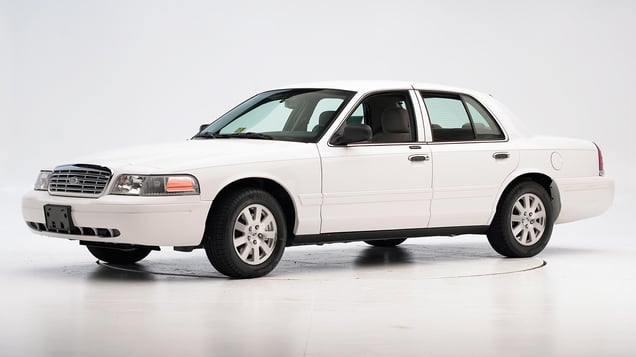
Learn about Ford Explorer (UN105/150; 1998-2001) fuse box and relay’s locations, functions, and maintenance tips for optimal vehicle electrical system.
If your 1998-2001 Ford Explorer has a dead interior light, malfunctioning power windows, or a radio that suddenly stopped working, a blown fuse or faulty relay is often the cause. Before scheduling a repair shop visit, knowing where your Explorer’s fuse boxes are located can help you quickly diagnose—and often fix—these common electrical issues on your own.
Fuses and relays are essential components that protect your vehicle’s electrical system from damage. Fuses are designed to blow when a circuit draws too much current, preventing wiring and components from overheating or catching fire. Relays act as electrically controlled switches, using a low-current signal to operate higher-powered systems like your headlights, cooling fan, or fuel pump.
For owners of this generation of Ford Explorer, understanding fuse box and relay locations is particularly useful since these vehicles are now old enough that electrical connections and components may require more frequent attention. This guide covers exactly where to find your Explorer’s fuse boxes and how to access them safely.
MUST READ: DYI – How to Check Car Fuses?
(1998-2001) Ford Explorer UN105/150 fuse box and relay with Diagram
WARNING
- Never replace a fuse with one that has a higher amperage rating.
- A fuse with a too-high amperage could damage the electrical part and cause a fire.
- On no account should fuses be repaired (e.g. patched up with tin foil or wire) as this may cause serious damage elsewhere in the electrical circuit or cause a fire.
- If a fuse blows repeatedly, do not keep replacing it. Instead, have the cause for the repeated short circuit or overload tracked and fixed.
- Terminal and harness assignments for individual connectors will vary depending on vehicle equipment level, model, and market.
Ford Explorer (UN105/150; 1998-2001) fuse assignment
Ford Explorer UN105/150 Year of production: 1998, 1999, 2001
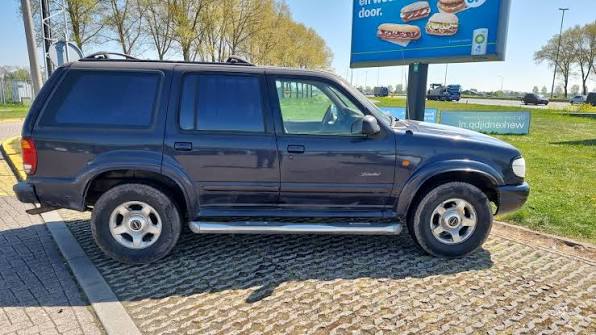
Fuse Box Locations in the 1998-2001 Ford Explorer
This generation of the Ford Explorer includes two primary fuse box locations: one in the engine bay and one inside the cabin. Each handles different electrical systems throughout the vehicle.
Engine Compartment Fuse Box
The engine bay fuse box, also referred to as the Power Distribution Box, is located near the battery on the driver’s side of the engine compartment. This box houses higher-amperage fuses and relays responsible for systems such as the headlights, engine cooling fan, ABS module, and horn.
To access this fuse box, make sure the engine is off and the ignition key is removed. Look for a black plastic cover secured with clips or retaining tabs along the edges. On some models, you may also find a couple of retaining screws. Unclip or unscrew the cover and lift it away to reveal the fuses and relays inside. A diagram identifying each component is typically printed on the underside of the cover for easy reference.
Interior Fuse Box (Passenger Compartment)
The interior fuse panel is located inside the cabin, under the dashboard on the driver’s side, near the kick panel to the left of the steering column. This fuse box manages cabin electrical systems including the radio, interior lighting, power windows, power door locks, and dashboard instrumentation.
To access it, sit in the driver’s seat and look beneath the dash near your left knee. The panel cover on this generation is typically a small hinged or snap-off door, sometimes labeled directly on the panel itself. Once opened, you’ll find the fuse layout along with a diagram printed on the inside of the cover, helping you quickly identify which fuse corresponds to which system.
How to Safely Access and Work with Fuses and Relays
Safety should always be your priority when working with your Explorer’s electrical system. Turn off the ignition and remove the key before opening either fuse box. Given the age of these vehicles, it’s also wise to disconnect the negative battery terminal before performing extended electrical work, as aging wiring and connectors can be more susceptible to accidental shorts.
When removing a fuse, use a plastic fuse-puller tool if one is available in the fuse box, or a small pair of non-conductive tweezers if the original tool is missing. Avoid using metal tools like screwdrivers or pliers, as these can cause sparks or short circuits if they accidentally bridge multiple terminals at once.
Relays in this generation of Explorer are plugged into sockets rather than clipped into place like fuses. To remove one, gently rock it from side to side while pulling upward to avoid bending the connector pins. Since these vehicles are over two decades old now, relay housings and sockets can become brittle over time, so handle them carefully to avoid cracking the plastic.
Identifying the Right Fuse or Relay
Each fuse and relay in your Explorer’s fuse boxes is labeled with a number or letter that corresponds to a printed diagram, usually found on the fuse box cover or in your owner’s manual. This diagram tells you exactly which fuse or relay controls which component, from your power mirrors to your dashboard lighting.
Before removing any fuse, cross-reference the diagram with the physical fuse box to confirm you’re pulling the correct one. This step is especially helpful on older vehicles, where fuse labels can sometimes fade or become difficult to read after years of use.
A blown fuse is generally easy to spot—look for a discolored appearance or a visibly broken metal strip inside the fuse. Always replace a blown fuse with one of the same amperage rating. Using a higher-rated fuse can damage your Explorer’s wiring and create a fire hazard, so it’s important to match the replacement exactly, even on an older model like this.
Checking and Replacing Fuses in Ford Explorer
If electrical components in the vehicle are not working, a fuse may have blown. Blown fuses are identified by a broken wire within the fuse. Check the appropriate fuses before replacing any electrical components. To remove a fuse use the fuse puller tool provided on the fuse panel cover.
Location of Fuse Boxes
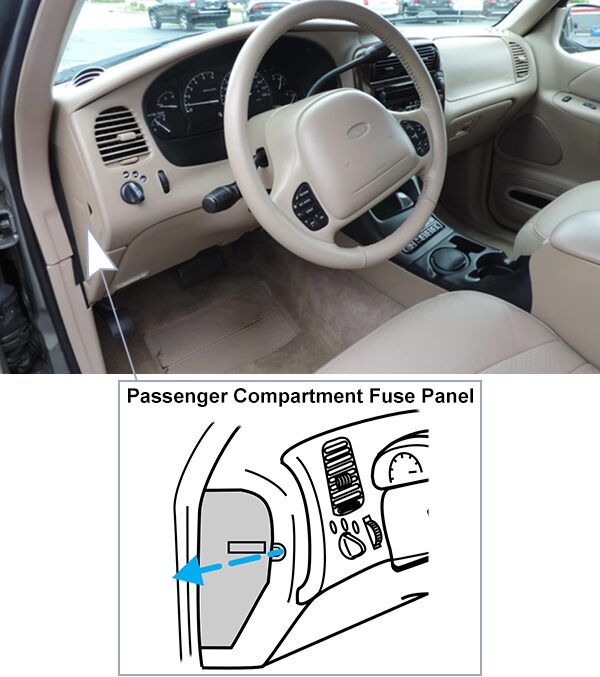
Passenger Compartment Fuse Panel:
The fuse panel is located on the left hand side of the instrument panel facing the driver’s side door. Pull the panel cover outward to access the fuses.
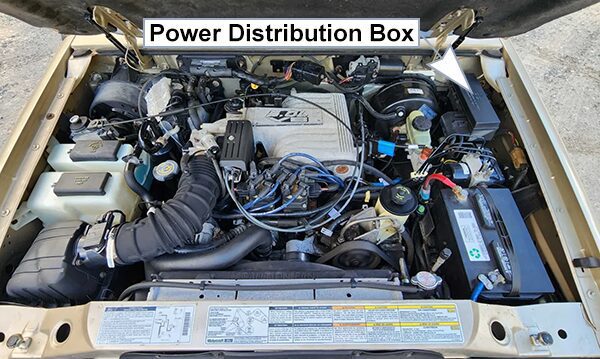
Power Distribution Box:
The power distribution box is located in the engine compartment. The power distribution box contains high-current fuses that protect your vehicle’s main electrical systems from overloads.
Fuse Box Diagrams
1998
Passenger Compartment Fuse Panel
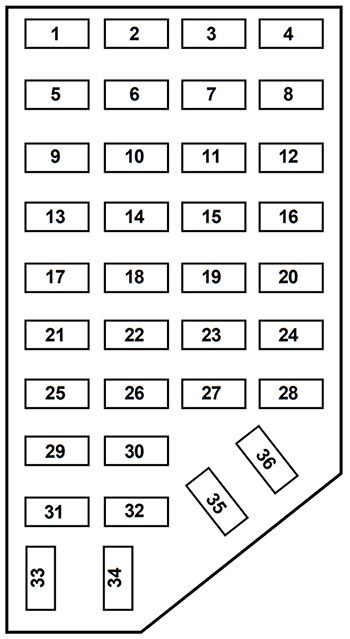
List of fuses in the passenger compartment fuse panel (1998)
| № | A | Description |
|---|---|---|
| 1 | 7.5A | Power Mirror Switch, Power Antenna |
| 2 | 7.5A | Blower Motor Relay, Air Bag Diagnostic Monitor |
| 3 | 7.5A | Left Stop/Turn Trailer Tow Connector |
| 4 | 10A | Left Headlamp |
| 5 | 10A | Data Link Connector (DLC) |
| 6 | 7.5A | Rear Blower Motor (Without EATC) |
| 7 | 7.5A | Right Stop/Turn Trailer Tow Connector |
| 8 | 10A | Right Headlamp, Foglamp Relay |
| 9 | 7.5A | Brake Pedal Position Switch |
| 10 | 7.5A | Speed Control/Amplifier Assembly, Brake Pressure Switch, Generic electronic Module (GEM), Shift Lock Actuator, Blend Door Actuator, A/C – Heater Assembly, Flasher |
| 11 | 7.5A | Instrument Cluster |
| 12 | 7.5A | Power Window Relay, Washer Pump Relay |
| 13 | 20A | Brake Pedal Position Switch, Brake Pressure Switch |
| 14 | 10A | 4 Wheel Anti-Lock Brake System (4WABS) Module, 4WABS Main Relay |
| 15 | 7.5A | Instrument Cluster |
| 16 | 30A | Windshield Wiper Motor, Wiper Hi-Lo Relay, Wiper Run/Park Relay |
| 17 | 25A | Cigar Lighter |
| 18 | 25A | Drivers Unlock Relay, All Unlock Relay, All Lock Relay |
| 19 | 25A | PCM Power Diode |
| 20 | 7.5A | RAP Module, Generic Electronic Module (GEM), Radio, CeHular Phone |
| 21 | 15A | Flasher (Hazard) |
| 22 | 20A | Auxiliary Power Socket |
| 23 | – | NOT USED |
| 24 | 7.5A | Clutch Pedal Position (CPP) Switch, Starter Intermpt Relay, Anti-Theft |
| 25 | 7.5A | Generic Electronic Module (GEM), Instrument Cluster, Securi-Lock |
| 26 | 10A | Battery Saver Relay, Electronic Shift Relay, Interior Lamp Relay, Power Window Relay, Electronic Shift Control Module |
| 27 | 15A | DRL, Backup Lamps Switch, DTR Sensor, GEM, Electric Shift |
| 28 | 7.5A | Generic Electronic Module (GEM), Radio, Memory Seat |
| 29 | 25A | Radio |
| 30 | 15A | Park Lamp/Trailer Tow Relay |
| 31 | – | NOT USED |
| 32 | 10A | Heated Mirror |
| 33 | 15A | Headlamps, Daytime Running Lamps (DRL) Module, Instrument Cluster |
| 34 | 7.5A | Rear Integrated Control Panel, CD |
| 35 | 7.5A | Rear Blower Motor (With EATC) |
| 36 | 7.5A | EATC Memory, CD, Rear Integrated Control Panel, Memory Seat, Message Center |
Power Distribution Box
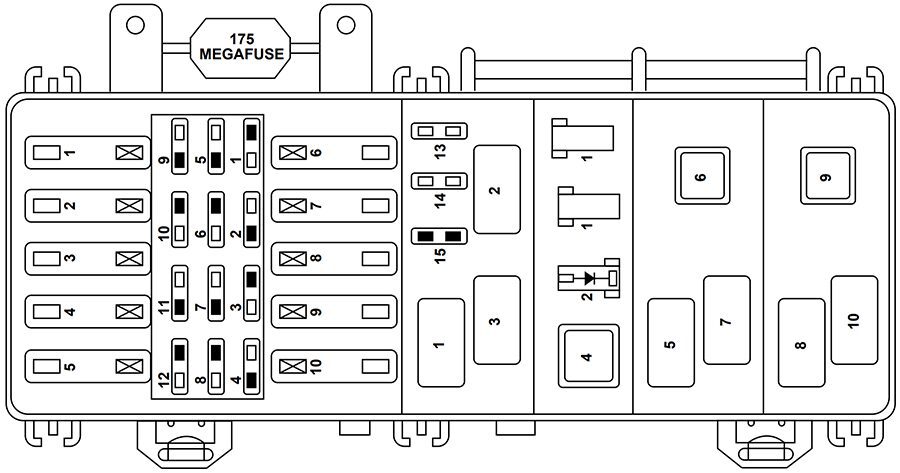
List of fuses in the power distribution box (1998)
| № | A | Description |
|---|---|---|
| 1 | 60A** | I/P Fuse Panel |
| 2 | 40A** | Blower Motor Relay |
| 3 | 50A** | 4 Wheel Anti-Lock Brake System (4WABS) Module |
| 4 | 30A** | Power Windows, Power Moon Roof, Power Seat |
| 5 | 50A** | Ignition Switch, Starter Relay |
| 6 | 20A** | Transfer Case Relay |
| 7 | – | NOT USED |
| 8 | 20A** | Automatic Ride Control ARC Switch Off/On Switch |
| 9 | 40A** | Automatic Ride Control Relay |
| 10 | 30A** | PCM Power Relay |
| 1 | 10A* | A/C Relay |
| 2 | – | NOT USED |
| 3 | 30A* | Heated Backlight |
| 4 | 15A* | Fog Lamps and Daytime Running Lamps |
| 5 | 10A* | Air Bag Diagnostic Monitor |
| 6 | 10A* | Powertrain Control Module |
| 7 | 30A* | 4 Wheel Anti-Lock System (4WABS) Module |
| 8 | 15A* | Rear Wiper Motor |
| 9 | 20A* | Fuel Pump Relay and RAP Module |
| 10 | 15A* | Horn Relay |
| 11 | 15A* | Parklamps Relay and Mainlight Switch |
| 12 | 30A* | Mainlight Switch and Multifunction Switch |
| 13 | 15A* | Heated Oxygen Sensor, EGR Vacuum Regulator, EVR Solenoid, Camshaft Position (CMP) Sensor, Canister Vent Solenoid |
| 14 | 30A* | Generator/Voltage Regulator |
| 15 | – | NOT USED |
| 1 | – | Wiper Park Relay |
| 2 | – | A/C Relay |
| 3 | – | Wiper High/Low Relay |
| 4 | – | PCM Power Relay |
| 5 | – | Fuel Pump Relay |
| 6 | – | Starter Relay |
| 7 | – | Horn Relay |
| 8 | – | Rear Wipe Down Relay |
| 9 | – | Blower Motor Relay |
| 10 | – | Rear Wipe Up Relay |
| 1 | – | NOT USED |
| 1 | – | NOT USED |
| 2 | – | Electronic Engine Controls Diode |
| * Mini Fuses ** Maxi Fuses 1 5.0L Engines Only | ||
1999
Passenger Compartment Fuse Panel
List of fuses in the passenger compartment fuse panel (1999)
| № | A | Description |
|---|---|---|
| 1 | 7.5A | Power Mirror Switch, Power Antenna |
| 2 | 7.5A | Blower Motor Relay, Air Bag Diagnostic Monitor |
| 3 | 7.5A | Left Stop/Turn Trailer Tow Connector |
| 4 | 10A | Left Headlamp |
| 5 | 10A | Data Link Connector (DLC) |
| 6 | 7.5A | Rear Blower Motor (Without EATC) |
| 7 | 7.5A | Right Stop/Turn Trailer Tow Connector |
| 8 | 10A | Right Headlamp, Foglamp Relay |
| 9 | 7.5A | Brake Pedal Position Switch |
| 10 | 7.5A | Speed Control/Amplifier Assembly, Generic electronic Module (GEM), Shift Lock Actuator, Blend Door Actuator, A/C – Heater Assembly, Flasher, Overhead Console, Load Leveling Module |
| 11 | 7.5A | Instrument Cluster |
| 12 | 7.5A | Washer Pump Relay, Rear Washer Pump Relay |
| 13 | 20A | Brake Pedal Position Switch, Brake Pressure Switch |
| 14 | 10A | 4 Wheel Anti-Lock Brake System (4WABS) Module, 4WABS Main Relay |
| 15 | 7.5A | Instrument Cluster |
| 16 | 30A | Windshield Wiper Motor, Wiper Hi-Lo Relay, Wiper Run/Park Relay |
| 17 | 25A | Cigar Lighter |
| 18 | 25A | Drivers Unlock Relay, All Unlock Relay, AH Lock Relay |
| 19 | 25A | PCM Power Diode |
| 20 | 7.5A | RAP Module, Generic Electronic Module (GEM), Radio |
| 21 | 15A | Flasher (Hazard) |
| 22 | 20A | Auxiliary Power Socket |
| 23 | – | Not Used |
| 24 | 7.5A | Clutch Pedal Position (CPP) Switch, Starter Interrupt Relay, Anti-Theft |
| 25 | 7.5A | Generic Electronic Module (GEM), Instrument Cluster, Securi-Lock |
| 26 | 10A | Battery Saver Relay, Electronic Shift Relay, Interior Lamp Relay, Electronic Shift Control Module |
| 27 | 15A | DRL, Backup Lamps Switch, DTR Sensor, Electric Shift |
| 28 | 7.5A | Generic Electronic Module (GEM), Radio, Memory Seat |
| 29 | 10A | Radio |
| 30 | 15A | Park Lamp/Trailer Tow Relay |
| 31 | – | Not Used |
| 32 | 10A | Heated Mirror |
| 33 | 15A | Headlamps, Daytime Running Lamps (DRL) Module, Instrument Cluster |
| 34 | 7.5A | Rear Integrated Control Panel, CD |
| 35 | 7.5A | Rear Blower Motor (w/EATC) |
| 36 | 7.5A | EATC Memory, CD, Rear Integrated Control Panel, Memory Seat, Message Center |
Power Distribution Box
List of fuses in the power distribution box (1999)
| № | A | Description |
|---|---|---|
| 1 | 60A** | I/P Fuse Panel |
| 2 | 40A** | Blower Motor Relay |
| 3 | 50A** | 4 Wheel Anti-Lock Brake System (4WABS) Module |
| 4 | 30A** | Power Windows, Power Moon Roof, Power Seat |
| 5 | 50A** | Ignition Switch, Starter Relay |
| 6 | 20A** | Transfer Case Relay |
| 7 | – | Not Used |
| 8 | 20A** | Automatic Ride Control ARC Switch Off/On Switch |
| 9 | 40A** | Automatic Ride Control Relay |
| 10 | 30A** | PCM Power Relay |
| 1 | 10A* | A/C Relay |
| 2 | 30A* | Heated Seats |
| 3 | 30A* | Heated Backlight |
| 4 | 15 A* | Fog Lamps and Daytime Running Lamps |
| 5 | – | Not Used |
| 6 | 10 A* | Powertrain Control Module |
| 7 | 30A* | 4 Wheel Anti-Lock System (4WABS) Module |
| 8 | 15 A* | Rear Wiper Motor |
| 9 | 20A* | Fuel Pump Relay and RAP Module |
| 10 | 15 A* | Horn Relay |
| 11 | 15 A* | Parklamps Relay and Mainlight Switch |
| 12 | 30A* | Mainlight Switch and Multifunction Switch |
| 13 | 15 A* | Heated Oxygen Sensor, EGR Vacuum Regulator, EVR Solenoid, Camshaft Position (CMP) Sensor, Canister Vent Solenoid |
| 14 | 30A* | Generator/Voltage Regulator |
| 15 | – | Not Used |
| 1 | – | Wiper Park Relay |
| 2 | – | A/C Relay |
| 3 | – | Wiper High/Low Relay |
| 4 | – | PCM Power Relay |
| 5 | – | Fuel Pump Relay |
| 6 | – | Starter Relay |
| 7 | – | Horn Relay |
| 8 | – | Rear Wipe Down Relay |
| 9 | – | Blower Motor Relay |
| 10 | – | Rear Wipe Up Relay |
| 1 | – | Not Used |
| 1 | – | Not Used |
| 2 | – | Electronic Engine Controls Diode |
| * Mini Fuses ** Maxi Fuses 1 5.0L Engines Only | ||
2000
Passenger Compartment Fuse Panel
List of fuses in the passenger compartment fuse panel (2000)
| № | A | Description |
|---|---|---|
| 1 | 7.5A | Power Mirror Switch, Power Antenna, Memory Seat |
| 2 | 7.5A | Blower Motor Relay, Air Bag Diagnostic Monitor |
| 3 | 7.5A | Left Stop/Turn Trailer Tow Connector |
| 4 | 10A | Left Headlamp |
| 5 | 10A | Data Link Connector (DLC) |
| 6 | 7.5A | Rear Blower Motor (Without EATC) |
| 7 | 7.5A | Right Stop/Turn Trailer Tow Connector |
| 8 | 10A | Right Headlamp, Foglamp Relay |
| 9 | 7.5A | Brake Pedal Position Switch |
| 10 | 7.5A | Speed Control/Amplifier Assembly, Generic electronic Module (GEM), Shift Lock Actuator, Blend Door Actuator, A/C – Heater Assembly, Flasher, Overhead Console, Load Leveling Module |
| 11 | 7.5A | Instrument Cluster |
| 12 | 7.5A | Washer Pump Relay, Rear Washer Pump Relay |
| 13 | 20 A | Brake Pedal Position Switch, Brake Pressure Switch |
| 14 | 10A | 4 Wheel Anti-Lock Brake System (4WABS) Module, 4WABS Main Relay |
| 15 | 7.5A | Instrument Cluster |
| 16 | 30A | Windshield Wiper Motor, Wiper Hi-Lo Relay, Wiper Run/Park Relay |
| 17 | 25A | Cigar Lighter |
| 18 | 25A | Drivers Unlock Relay, All Unlock Relay, All Lock Relay, Power Seats |
| 19 | 25A | PCM Power Diode |
| 20 | 7.5A | RAP Module, Generic Electronic Module (GEM), Radio |
| 21 | 15A | Flasher (Hazard) |
| 22 | 20A | Auxiliary Power Socket |
| 23 | – | Not Used |
| 24 | 7.5A | Clutch Pedal Position (CPP) Switch, Starter Interrupt Relay, Anti-Theft |
| 25 | 7.5A | Generic Electronic Module (GEM), Instrument Cluster, Securi-Lock |
| 26 | 10A | Battery Saver Relay, Electronic Shift Relay, Interior Lamp Relay, Electronic Shift Control Module |
| 27 | 15A | DRL, Backup Lamps Switch, DTR Sensor, Electric Shift |
| 28 | 7.5A | Generic Electronic Module (GEM), Radio, Memory Seat |
| 29 | 25A | Radio |
| 30 | 15A | Park Lamp/Trailer Tow Relay |
| 31 | – | Not Used |
| 32 | 10A | Heated Mirror |
| 33 | 15A | Headlamps, Daytime Running Lamps (DRL) Module, Instrument Cluster |
| 34 | 7.5A | Rear Integrated Control Panel, CD |
| 35 | 7.5A | Rear Blower Motor (w/EATC) |
| 36 | 7.5A | EATC Memory, CD, Rear Integrated Control Panel, Memory Seat, Message Center |
Power Distribution Box
List of fuses in the power distribution box (2000)
| № | A | Description |
|---|---|---|
| 1 | 60A** | I/P Fuse Panel |
| 2 | 40A** | Blower Motor Relay |
| 3 | 50A** | 4 Wheel Anti-Lock Brake System (4WABS) Module |
| 4 | 30A** | Power Windows, Power Moon Roof, Power Seat |
| 5 | 50A** | Ignition Switch, Starter Relay |
| 6 | 20A** | Transfer Case Relay |
| 7 | – | Not Used |
| 8 | 20A** | Air Suspension |
| 9 | 40A** | Air Suspension |
| 10 | 30A** | PCM Power Relay |
| 1 | 10A* | A/C Relay |
| 2 | 30A* | Heated Seats |
| 3 | 30A* | Heated Backlight |
| 4 | 15A* | Fog Lamps and Daytime Running Lamps |
| 5 | – | Not Used |
| 6 | 10A* | Powertrain Control Module |
| 7 | 30A* | 4 Wheel Anti-Lock System (4WABS) Module |
| 8 | 15A* | Rear Wiper Motor |
| 9 | 20A* | Fuel Pump Relay and RAP Module |
| 10 | 15A* | Horn Relay |
| 11 | 15A* | Parklamps Relay and Mainlight Switch |
| 12 | 30A* | Mainlight Switch and Multifunction Switch |
| 13 | 15A* | Heated Oxygen Sensor, EGR Vacuum Regulator, EVR Solenoid, Camshaft Position (CMP) Sensor, Canister Vent Solenoid |
| 14 | 30A* | Generator/Voltage Regulator |
| 15 | – | Not Used |
| 1 | – | Wiper Park Relay |
| 2 | – | A/C Relay |
| 3 | – | Wiper High/Low Relay |
| 4 | – | PCM Power Relay |
| 5 | – | Fuel Pump Relay |
| 6 | – | Starter Relay |
| 7 | – | Horn Relay |
| 8 | – | Rear Wipe Down Relay |
| 9 | – | Blower Motor Relay |
| 10 | – | Rear Wipe Up Relay |
| 1 | – | Not Used |
| 1 | – | DRL Diode |
| 2 | – | Electronic Engine Controls Diode |
| * Mini Fuses ** Maxi Fuses | ||
2001
Passenger Compartment Fuse Panel
List of fuses in the passenger compartment fuse panel (2001)
| № | A | Description |
|---|---|---|
| 1 | 7.5A | Power Mirror Switch, Power Antenna, Memory Seat |
| 2 | 7.5A | Blower Motor Relay, Air Bag Diagnostic Monitor |
| 3 | 7.5A | Left Stop/Turn Trailer Tow Connector |
| 4 | 10A | Left Headlamp |
| 5 | 10A | Data Link Connector (DLC) |
| 6 | 7.5A | Rear Blower Motor (Without EATC) |
| 7 | 7.5A | Right Stop/Turn Trailer Tow Connector |
| 8 | 10A | Right Headlamp, Foglamp Relay |
| 9 | 7.5A | Brake Pedal Position Switch |
| 10 | 7.5A | Speed Control/Amplifier Assembly, Generic electronic Module (GEM), Shift Lock Actuator, Blend Door Actuator, A/C – Heater Assembly, Flasher, Overhead Console, Load Leveling Module |
| 11 | 7.5A | Instrument Cluster |
| 12 | 7.5A | Washer Pump Relay, Rear Washer Pump Relay |
| 13 | 20A | Brake Pedal Position Switch, Brake Pressure Switch |
| 14 | 10A | 4 Wheel Anti-Lock Brake System (4WABS) Module, 4WABS Main Relay |
| 15 | 7.5A | Instrument Cluster |
| 16 | 30A | Windshield Wiper Motor, Wiper Hi-Lo Relay, Wiper Run/Park Relay |
| 17 | 25A | Cigar Lighter |
| 18 | 25A | Drivers Unlock Relay, All Unlock Relay, All Lock Relay, Power Seats |
| 19 | 25A | PCM Power Diode |
| 20 | 7.5A | RAP Module, Generic Electronic Module (GEM), Radio |
| 21 | 15A | Flasher (Hazard) |
| 22 | 20A | Auxiliary Power Socket |
| 23 | – | Not Used |
| 24 | 7.5A | Clutch Pedal Position (CPP) Switch, Starter Interrupt Relay, Anti-Theft |
| 25 | 7.5A | Generic Electronic Module (GEM), Instrument Cluster, Securi-Lock |
| 26 | 10A | Battery Saver Relay, Electronic Shift Relay, Interior Lamp Relay, Electronic Shift Control Module |
| 27 | 15A | DRL, Backup Lamps Switch, DTR Sensor, Electric Shift |
| 28 | 7.5A | Generic Electronic Module (GEM), Radio, Memory Seat |
| 29 | 25A | Radio |
| 30 | 15A | Park Lamp/Trailer Tow Relay |
| 31 | – | Not Used |
| 32 | 10A | Heated Mirror |
| 33 | 15A | Headlamps, Daytime Running Lamps (DRL) Module, Instrument Cluster |
| 34 | 7.5A | Rear Integrated Control Panel, CD |
| 35 | 7.5A | Rear Blower Motor (w/EATC) |
| 36 | 7.5A | EATC Memory, CD, Rear Integrated Control Panel, Memory Seat, Message Center |
Power Distribution Box
List of fuses in the power distribution box (2001)
| № | A | Description |
|---|---|---|
| 1 | 60A** | I/P Fuse Panei fuses 1, 9, and 13 |
| 2 | 40A** | Blower Motor Relay |
| 3 | 50A** | 4 Wheel Anti-Lock Brake System (4WABS) Module |
| 4 | 30A** | Power Moon Roof, Accessory Relay Delay |
| 5 | 50A** | Ignition Switch, Starter Relay |
| 6 | 20A** | Transfer Case Relay |
| 7 | – | Not Used |
| 8 | 20A** | Air Suspension |
| 9 | 40A** | Air Suspension |
| 10 | 30A** | PCM Power Relay |
| 1 | 10A* | A/C Relay |
| 2 | 30A* | Heated Seats |
| 3 | 30A* | Heated Backlight |
| 4 | 15A* | Fog Lamps and Daytime Running Lamps |
| 5 | – | Not Used |
| 6 | 10A* | Powertrain Control Module |
| 7 | 30A* | 4 Wheel Anti-Lock System (4WABS) Module |
| 8 | 15A* | Rear Wiper Motor |
| 9 | 20A* | Fuel Pump Relay and RAP Module |
| 10 | 15A* | Horn Relay |
| 11 | 15A* | Parklamps Relay and Mainlight Switch |
| 12 | 30A* | Mainlight Switch and Multifunction Switch |
| 13 | 15A* | Heated Oxygen Sensor, EGR Vacuum Regulator, EVR Solenoid, Camshaft Position (CMP) Sensor, Canister Vent Solenoid |
| 14 | 30A* | Generator/Voltage Regulator |
| 15 | – | Not Used |
| 1 | – | Wiper Park Relay |
| 2 | – | A/C Relay |
| 3 | – | Wiper High/Low Relay |
| 4 | – | PCM Power Relay |
| 5 | – | Fuel Pump Relay |
| 6 | – | Starter Relay |
| 7 | – | Horn Relay |
| 8 | – | Rear Wipe Down Relay |
| 9 | – | Blower Motor Relay |
| 10 | – | Rear Wipe Up Relay |
| 1 | – | Not Used |
| 1 | – | DRL Diode |
| 2 | – | Electronic Engine Controls Diode |
| * Mini Fuses ** Maxi Fuses | ||
Conclusion
Understanding the fuse box and relay locations in your 1998-2001 Ford Explorer gives you the confidence to troubleshoot common electrical issues without unnecessary trips to the mechanic. From the engine bay’s Power Distribution Box to the interior fuse panel near the driver’s kick panel, knowing these locations makes diagnosing problems faster and more straightforward.
That said, given the age of these vehicles, if you’ve checked the relevant fuses and relays and the issue persists, it may be worth consulting a mechanic experienced with older Ford models. Aging wiring harnesses and connectors can sometimes cause intermittent electrical problems that go beyond a simple fuse replacement, and a professional diagnosis can help you avoid unnecessary guesswork.