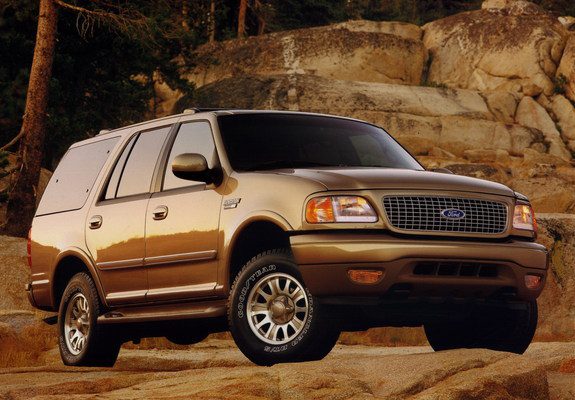
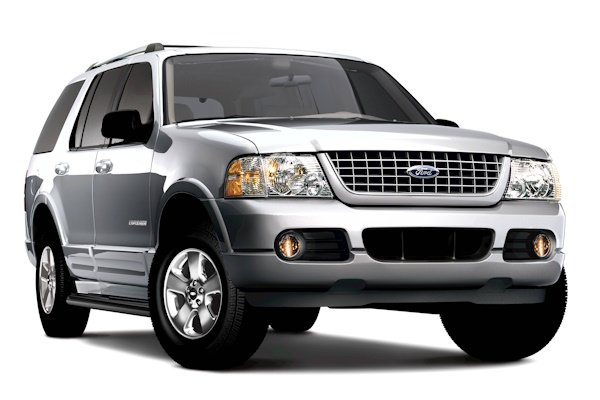
Learn about Ford Explorer (U152; 2002-2005) fuse box and relay’s locations, functions, and maintenance tips for optimal vehicle electrical system.
If you own a 2002-2005 Ford Explorer and you’re dealing with a dead power outlet, malfunctioning headlights, or a radio that suddenly stopped working, the problem often traces back to a blown fuse or faulty relay. Understanding your Explorer’s fuse box and relay locations can save you time, money, and a trip to the mechanic for what might be a simple fix.
Fuse boxes and relays are the unsung heroes of your vehicle’s electrical system. Fuses act as safety devices, breaking the circuit when there’s too much electrical current flowing through—protecting sensitive components like your radio, power windows, and dashboard lights from damage. Relays, on the other hand, are electrically operated switches that control higher-power components such as the cooling fan, horn, and fuel pump using a smaller electrical signal.
Knowing where these components live in your Ford Explorer isn’t just for mechanics. Whether you’re troubleshooting a specific electrical issue or performing routine maintenance, having this knowledge empowers you to diagnose problems quickly and confidently. Let’s break down exactly where to find them.
MUST READ: DYI – How to Check Car Fuses?
(2002-2005) Ford Explorer U152 fuse box and relay with Diagram
WARNING
- Never replace a fuse with one that has a higher amperage rating.
- A fuse with a too-high amperage could damage the electrical part and cause a fire.
- On no account should fuses be repaired (e.g. patched up with tin foil or wire) as this may cause serious damage elsewhere in the electrical circuit or cause a fire.
- If a fuse blows repeatedly, do not keep replacing it. Instead, have the cause for the repeated short circuit or overload tracked and fixed.
- Terminal and harness assignments for individual connectors will vary depending on vehicle equipment level, model, and market.
The Ford Explorer from this generation is equipped with two primary fuse box locations: one under the hood and one inside the cabin. Each serves a different purpose and houses fuses and relays for specific vehicle systems.
Engine Compartment Fuse Box
The engine bay fuse box, sometimes called the Power Distribution Box, is located near the battery on the driver’s side of the engine compartment. This box primarily houses high-amperage fuses and relays that control major components like the engine cooling fan, anti-lock braking system (ABS), horn, and headlights.
To access this fuse box, first make sure your engine is off and the key is out of the ignition. Locate the black plastic cover near the battery—it typically has “FUSE” or a fuse symbol molded into the top. Unclip the retaining tabs along the edges of the cover, or in some cases, unscrew a few retaining bolts, then lift the cover straight up to remove it. Inside, you’ll find a layout of fuses and relays that correspond to a diagram usually printed on the underside of the cover itself.
Interior Fuse Box (Passenger Compartment)
The second fuse box is located inside the cabin, tucked under the dashboard on the driver’s side, near the area below the steering column. This fuse box controls interior electrical components such as the power windows, door locks, radio, dashboard lights, and climate control system.
To access it, sit in the driver’s seat and look beneath the dash, close to where your left knee would be when driving. You’ll find a small panel cover, often held in place by a simple clip or a couple of screws. Gently pull or unscrew the cover to reveal the fuse panel. Just like the engine bay fuse box, this panel usually has a fuse diagram printed on the inside of the cover for quick reference.
Some Explorer models from this era may also feature an auxiliary relay panel near the interior fuse box or integrated into the same housing, so check both areas if you’re hunting for a specific relay.
How to Safely Access and Work with Fuses and Relays
Before you start pulling fuses or relays, safety should be your top priority. Always turn off the ignition and remove the key before opening any fuse box. If you’re working near the battery or replacing multiple fuses, it’s a good idea to disconnect the negative battery terminal to avoid accidental short circuits or electrical shocks.
When removing a fuse, use the plastic fuse-pulling tool often included in the fuse box itself (usually clipped near the panel). This tool is designed to grip the fuse without damaging surrounding components. Avoid using metal tools like pliers or screwdrivers, as they can cause short circuits or damage the fuse terminals.
Relays can be a bit trickier to remove since they’re plugged into sockets rather than clipped in like fuses. Gently rock the relay back and forth while pulling upward to avoid bending the pins. If a relay feels stuck, double-check that you’re not missing a small retaining clip before applying more force.
Identifying the Right Fuse or Relay
Every fuse and relay in your Ford Explorer’s fuse box has a specific designation, usually marked by a number or letter on the panel itself. These correspond to a fuse diagram, typically printed on the fuse box cover or included in your owner’s manual, that lists which fuse controls which component.
When troubleshooting, always match the fuse number on the diagram to the physical fuse box location before removing anything. This prevents unnecessary guesswork and ensures you’re only touching the fuse or relay related to your specific issue, whether it’s a non-working taillight or an unresponsive power seat.
If a fuse appears discolored or has a visibly broken metal strip inside, that’s a clear sign it has blown and needs replacement. Always replace a fuse with one of the same amperage rating, using a higher-rated fuse can damage your vehicle’s wiring and create a fire hazard.
Ford Explorer U152 (2002-2005) fuse assignment
Ford Explorer U152 Year of production: 2002, 2003, 2004, 2005
Checking and Replacing Fuses in Ford Explorer
If electrical components in the vehicle are not working, a fuse may have blown. Blown fuses are identified by a broken wire within the fuse. Check the appropriate fuses before replacing any electrical components. To remove a fuse use the fuse puller tool provided on the fuse panel box.
Location of Fuse Boxes
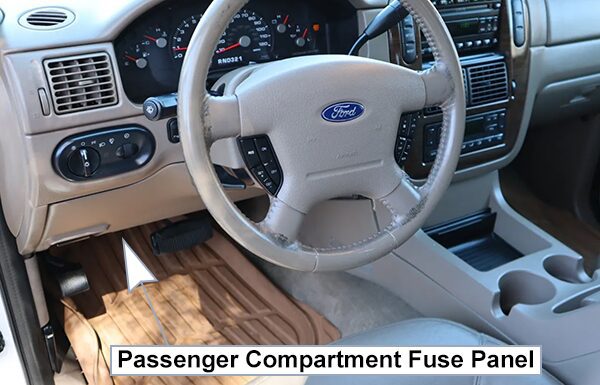
Passenger Compartment Fuse Panel:
The fuse panel is located below the instrument panel on the driver’s side.
Passenger Compartment Fuse Panel (Top Side):
These relays are located on the reverse side of the passenger compartment fuse panel. To access the relays you must remove the passenger compartment fuse panel. See your dealer or a certified technician for service of this relay box.
Rear Relay Box:
The relay box is located on the rear passenger side quarter trim panel. To access this box you must remove the trim panel.
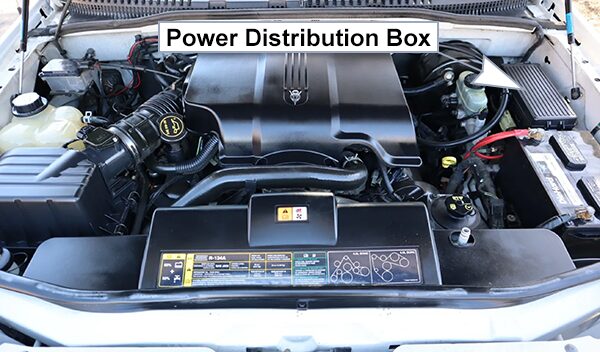
Power Distribution Box:
The power distribution box is located in the engine compartment. The power distribution box contains high-current fuses that protect your vehicle’s main electrical systems from overloads.
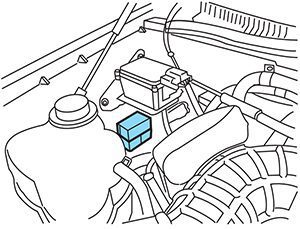
Auxiliary Relay Box:
The relay box is located on the front right fender well underneath the speed control module.
Fuse Box Diagrams
2002
Passenger Compartment Fuse Panel
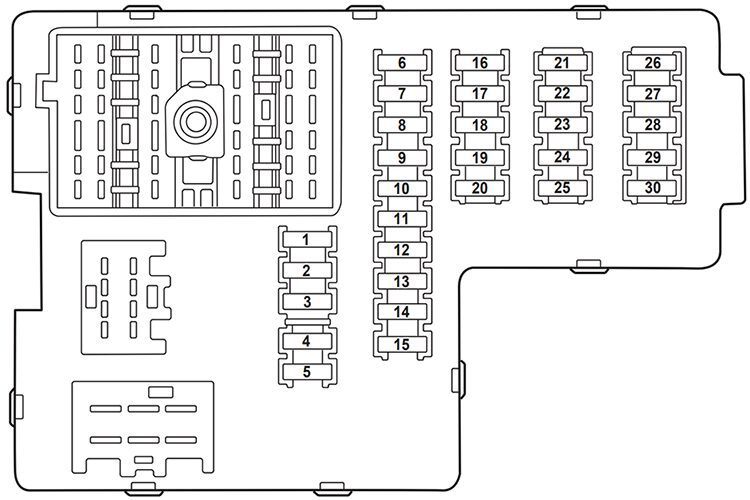
List of fuses in the passenger compartment fuse panel (2002)
| № | A | Description |
|---|---|---|
| 1 | 30A | Memory seat module |
| 2 | 20A | Heated seats, Moonroof |
| 3 | 20A | Radio, Amplifier, Power antenna, DVD |
| 4 | 5A | Front wiper module |
| 5 | 15A | Flasher relay (Turn, hazards) |
| 6 | 10A | Right horn |
| 7 | 15A | Heated mirrors |
| 8 | – | Not used (spare) |
| 9 | – | Not used (spare) |
| 10 | 10A | Heated backlight relay coil, Heated seat module, Temp blend actuator, A/C clutch contact |
| 11 | – | Not used (spare) |
| 12 | 5A | Foglamp switch, 4×4 module |
| 13 | 5A | Overdrive cancel switch, Flex fuel sender |
| 14 | 5A | PATS module |
| 15 | 5A | Rear wiper module, Cluster, TPMS |
| 16 | 5A | Power mirror, Manual climate control, TPMS |
| 17 | 15A | Delayed acc. coil, Battery saver, Interior lamps (front and rear), Glove compartment lamp |
| 18 | 10A | Left horn |
| 19 | 10A | RCM, PAD indicator |
| 20 | 5A | PATS, Driver seat switch, Memory switch, Driver seat module, BSM, Sunload sensor |
| 21 | 5A | Instrument cluster, Compass, Flasher coil |
| 22 | 10A | ABS, IVD Controller |
| 23 | 15A | Brake pedal position switch, Driver brake applied relay, Redundant cruise deactivate switch |
| 24 | 15A | Cigar lighter, OBD II |
| 25 | 5A | Mode-Temperature actuator for auxiliary climate control, Trailer tow battery charge coil |
| 26 | 7.5A | Park aid, Brake shift interlock, Approach lamp relay coil, IVD switch |
| 27 | 7.5A | Electrochromatic mirror, Digital transmission range sensor -backup lamps |
| 28 | 5A | Radio (Start)/DVD (Start) |
| 29 | 10A | Digital transmission range sensor, PWR feed to fuse #28 (Start feed) |
| 30 | 5A | Daytime Running Lamps (DRL), Remote solenoid, DEATC climate controller |
Passenger Compartment Fuse Panel (Top Side)
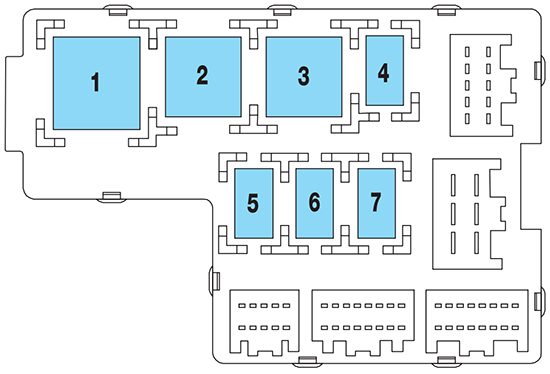
List of fuses in the passenger compartment fuse panel (top side) (2002)
| № | Description |
|---|---|
| Relay 1 | Flasher relay |
| Relay 2 | Rear defrost |
| Relay 3 | Delayed accessory relay |
| Relay 4 | Open |
| Relay 5 | Battery saver |
| Relay 6 | Open |
| Relay 7 | Open |
Power Distribution Box
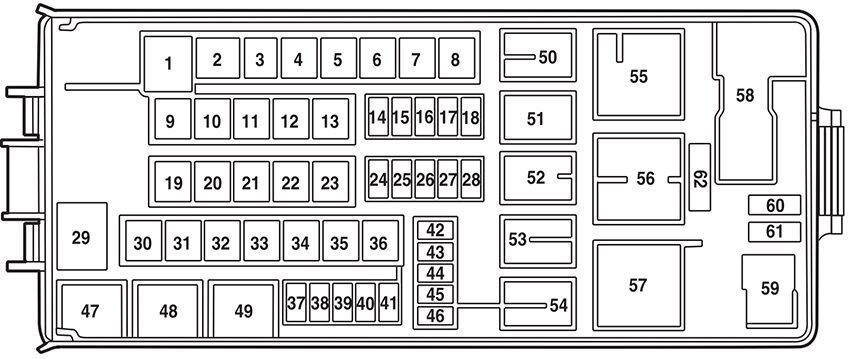
List of fuses in the power distribution box (2002)
| № | A | Description |
|---|---|---|
| 1 | 60A** | PJB |
| 2 | 30A** | BSM |
| 3 | 20A** | GCC pusher fan (export only) |
| 4 | 30A** | Rear defrost |
| 5 | 40A** | Anti-lock Brake System (ABS) pump |
| 6 | 60A** | Delayed accessory Circuit breaker |
| 7 | 20A** | Power point #2 |
| 8 | – | Not used |
| 9 | 20A** | Power point #1 |
| 10 | 30A** | ABS module (valves) |
| 11 | 40A** | PTEC |
| 12 | 50A** | Ignition relay/Starter relay |
| 13 | 40A** | Trailer tow battery, Trailer tow turn signals |
| 14 | 10A* | Daytime Running Lamps (DRL) (Canada)/Foglamps (export only) |
| 15 | 15A* | Memory (KAPWR) |
| 16 | 15A* | Headlamp switch |
| 17 | 20A* | 4×4 (v-batt 2) |
| 18 | 20A* | 4×4 (v-batt 1) |
| 19 | 20A** | High beam relay |
| 20 | 30A** | Electric brake |
| 21 | 30A** | Front wiper motor |
| 22 | 20A** | Autolamp; Low beam |
| 23 | 30A** | Ignition switch |
| 24 | 20A* | Rear fog lamps (Export only) |
| 25 | – | Not used |
| 26 | 15A* | Fuel pump |
| 27 | 20A* | Trailer tow lamps |
| 28 | 20A* | Horn relay |
| 29 | 60A** | PJB |
| 30 | 20A** | Rear wiper motor |
| 31 | – | Not used |
| 32 | – | Not used |
| 33 | 30A** | Auxiliary blower motor |
| 34 | 30A** | Power seats, Adjustable pedais |
| 35 | 20A** | Rear power point |
| 36 | 40A** | Blower motor |
| 37 | 15A* | A/C clutch relay/Transmission |
| 38 | 15A* | Coil on plug |
| 39 | 15A* | Injectors/Fuel pump relay |
| 40 | 15A* | PTEC power |
| 41 | 15A* | HEGO, VMV, CMS, PTEC |
| 42 | 10A* | Right low beam |
| 43 | 10A* | Left low beam |
| 44 | 15A* | Front foglamps |
| 45 | 5A* | Brake pressure switch |
| 46 | 20A* | High beams |
| 47 | – | Horn relay |
| 48 | – | Fuel pump relay |
| 49 | – | High beam relay |
| 50 | – | Fog lamp relay |
| 51 | – | Police IVD relay |
| 52 | – | A/C clutch relay |
| 53 | – | Trailer tow right turn |
| 54 | – | Trailer tow left turn |
| 55 | – | Blower motor relay |
| 56 | – | Starter relay |
| 57 | – | PTEC relay |
| 58 | – | Ignition relay |
| 59 | – | Driver brake applied or DRL relay (Canada only) |
| 60 | – | PCM diode |
| 61 | – | A/C clutch diode |
| 62 | 30A CB | Delayed accessory |
| * Mini Fuses ** Maxi Cartridge Fuses | ||
Rear Relay Box
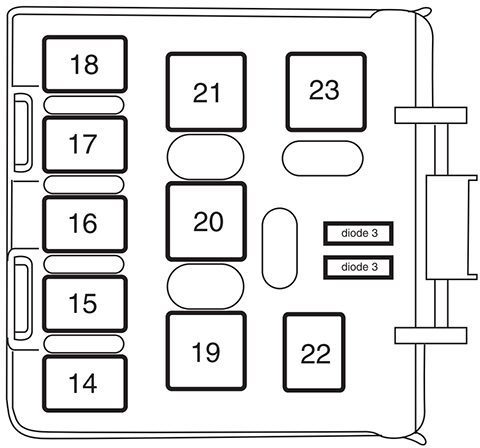
List of fuses in the rear relay box (2002)
| № | Description |
|---|---|
| Relay 14 | Not used |
| Relay 15 | Trailer tow back-up lamps |
| Relay 16 | Not used |
| Relay 17 | Not used |
| Relay 18 | Not used |
| Relay 19 | Trailer tow park lamps |
| Relay 20 | Trailer tow battery charge |
| Relay 21 | Not used |
| Relay 22 | Approach lamps |
| Relay 23 | Not used |
| Diode 3 | Not used |
| Diode 4 | Not used |
Auxiliary Relay Box (Canadian vehicles equipped with AdvanceTrac only)
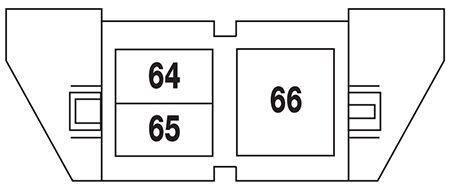
| № | Description |
|---|---|
| Relay 64 | Police vehicles equipped with AdvanceTrac |
| Relay 65 | Open |
| Relay 66 | Open |
2003
Passenger Compartment Fuse Panel
List of fuses in the passenger compartment fuse panel (2003)
| № | A | Description |
|---|---|---|
| 1 | 30A | Memory seat module, Driver power seat |
| 2 | 20A | Moonroof |
| 3 | 20A | Radio, Amplifier, DVD |
| 4 | 5A | Front wiper module |
| 5 | 15A | Flasher relay (Turn, hazards) |
| 6 | 10A | Right horn |
| 7 | 15A | Heated mirrors |
| 8 | – | Not used |
| 9 | – | Not used |
| 10 | 10A | Heated backlight relay coil, A/C clutch contact |
| 11 | 20A | Heated seats |
| 12 | 5A | 4×4 module |
| 13 | 5A | Overdrive cancel switch, Flex fuel sender |
| 14 | 5A | PATS module |
| 15 | 5A | Rear wiper module, Cluster, TPMS |
| 16 | 5A | Power mirror, Manual climate control, TPMS |
| 17 | 15A | Delayed acc. coil, Battery saver, Glove compartment lamp, 2nd row courtesy lamps, Interior lamps (front) |
| 18 | 10A | Left horn |
| 19 | 10A | RCM |
| 20 | 5A | Driver seat switch, Driver seat module, BSM, Sunload sensor |
| 21 | 5A | Instrument cluster, Compass, Flasher coil |
| 22 | 10A | ABS, IVD Controller |
| 23 | 15A | Brake pedal position switch, Driver brake applied relay, Redundant cruise deactivate switch |
| 24 | 15A | Cigar lighter, OBD II |
| 25 | 5A | Mode-Temperature actuator for auxiliary climate control, Trailer tow battery charge coil |
| 26 | 7.5A | Park aid, Brake shift interlock, IVD switch |
| 27 | 7.5A | Electrochromatic mirror, Digital transmission range sensor – backup lamps |
| 28 | 5A | Radio (Start)/DVD (Start) |
| 29 | 10A | Digital transmission range sensor, PWR feed to fuse #28 (Start feed) |
| 30 | 5A | Daytime Running Lamps (DRL), Remote solenoid, DEATC climate controller, Manual climate control, Manual climate control temp blend actuator |
Passenger Compartment Fuse Panel (Top Side)
List of fuses in the passenger compartment fuse panel (top side) (2003)
| № | Description |
|---|---|
| Relay 1 | Flasher |
| Relay 2 | Rear defrost |
| Relay 3 | Delayed accessory |
| Relay 4 | Open |
| Relay 5 | Battery saver |
| Relay 6 | Open |
| Relay 7 | Open |
Power Distribution Box
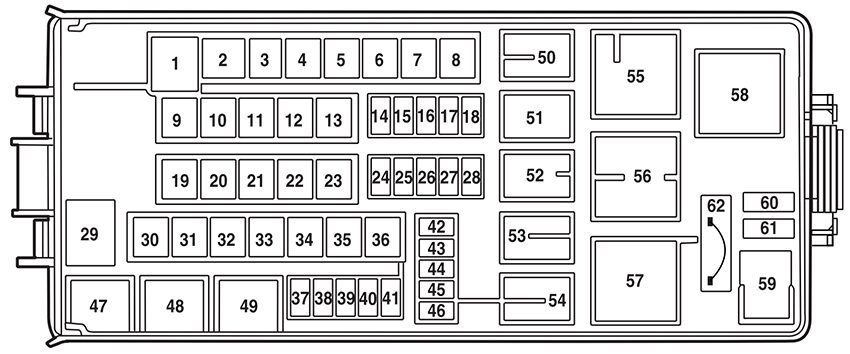
List of fuses in the power distribution box (2003)
| № | A | Description |
|---|---|---|
| 1 | 60A** | PJB |
| 2 | 30A** | BSM |
| 3 | – | Not used |
| 4 | 30A** | Rear defrost |
| 5 | 40A** | Anti-lock Brake System (ABS) pump |
| 6 | 60A** | Delayed accessory |
| 7 | 20A** | Power point #2 |
| 8 | – | Not used |
| 9 | 20A** | Power point #1 |
| 10 | 30A** | ABS module (valves) |
| 11 | 40A** | PTEC |
| 12 | 50A** | Ignition relay, Starter relay |
| 13 | 40A** | Trailer tow battery, Trailer tow turn signals |
| 14 | 10A* | Daytime Running Lamps (DRL) (Canada) |
| 15 | 15A* | Memory (PCM/DEATC/Cluster), Interior lights |
| 16 | 15A* | Headlamp switch, Foglamp switch |
| 17 | 20A* | 4×4 (v-batt 2) |
| 18 | 20A* | 4×4 (v-batt 1) |
| 19 | 20A** | High beam relay |
| 20 | 30A** | Electric brake |
| 21 | 30A** | Front wiper motor |
| 22 | 20A** | Low beam |
| 23 | 30A** | Ignition switch |
| 24 | – | Not used |
| 25 | – | Not used |
| 26 | 15A* | Fuel pump |
| 27 | 20A* | Trailer tow lamps |
| 28 | 20A* | Horn relay |
| 29 | 60A** | PJB |
| 30 | 20A** | Rear wiper motor |
| 31 | – | Not used |
| 32 | – | Not used |
| 33 | 30A** | Auxiliary blower motor |
| 34 | 30A** | Passenger power seat, Adjustable pedais |
| 35 | – | Not used |
| 36 | 40A** | Blower motor |
| 37 | 15A* | A/C clutch relay, Transmission |
| 38 | 15A* | Coil on plug |
| 39 | 15A* | Injectors, Fuel pump relay |
| 40 | 15A* | PTEC power |
| 41 | 15A* | HEGO, VMV, CMS, PTEC |
| 42 | 10A* | Right low beam |
| 43 | 10A* | Left low beam |
| 44 | 15A* | Front foglamps |
| 45 | 2A* | Brake pressure switch (ABS) |
| 46 | 20A* | High beams |
| 47 | – | Horn relay |
| 48 | – | Fuel pump relay |
| 49 | – | High beam relay |
| 50 | – | Fog lamp relay |
| 51 | – | DRL relay (Canada)/AdvanceTrac relay (U.S.) |
| 52 | – | A/C clutch relay |
| 53 | – | Trailer tow right turn relay |
| 54 | – | Trailer tow left turn relay |
| 55 | – | Blower motor relay |
| 56 | – | Starter relay |
| 57 | – | PTEC relay |
| 58 | – | Ignition relay |
| 59 | – | Driver brake applied relay (vehicles equipped with AdvanceTrac only) |
| 60 | – | PCM diode |
| 61 | – | A/C clutch diode |
| 62 | 30A CB | Power Windows Circuit breaker |
| * Mini Fuses ** Maxi Cartridge Fuses | ||
Rear Relay Box
List of fuses in the rear relay box (2003)
| № | Description |
|---|---|
| Relay 14 | Not used |
| Relay 15 | Trailer tow back-up lamps |
| Relay 16 | Not used |
| Relay 17 | Not used |
| Relay 18 | Not used |
| Relay 19 | Trailer tow park lamps |
| Relay 20 | Trailer tow battery charge |
| Relay 21 | Not used |
| Relay 22 | Not used |
| Relay 23 | Not used |
| Diode 3 | Not used |
| Diode 4 | Not used |
Auxiliary relay box (Canadian vehicles equipped with AdvanceTrac)
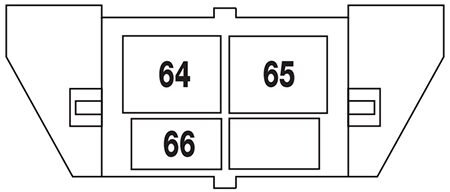
| № | Description |
|---|---|
| Relay 64 | AdvanceTrac relay |
| Relay 65 | Open |
| Relay 66 | Open |
2004
Passenger Compartment Fuse Panel
List of fuses in the passenger compartment fuse panel (2004)
| № | A | Description |
|---|---|---|
| 1 | 30A | Memory seat module, Driver power seat |
| 2 | 20A | Moonroof |
| 3 | 20A | Radio, Amplifier, DVD |
| 4 | 5A | Front wiper module |
| 5 | 15A | Flasher relay (Turn, hazards) |
| 6 | 10A | Key-in-chime |
| 7 | 15A | Heated mirrors |
| 8 | 5A | Heated PCV (4.0L engine only) |
| 9 | 15A | Not used |
| 10 | 10A | Heated backlight relay coil, A/C clutch contact |
| 11 | 20A | Heated seats |
| 12 | 5A | 4×4 (switch) |
| 13 | 5A | Overdrive cancel switch |
| 14 | 5A | PATS |
| 15 | 5A | Rear wiper module, Cluster |
| 16 | 5A | Power mirror, Manual climate control, TPMS |
| 17 | 15A | Delayed accessory relay coil/Battery saver coil and contact/Reading and glove box lamps |
| 18 | 10A | Flexible fuel pump |
| 19 | 10A | Restraint Control Module (RCM) |
| 20 | 5A | Memory driver seat switch, Driver seat module, Body Security Module (BSM), PATS LED |
| 21 | 5A | Instrument cluster, Compass, Flasher coil |
| 22 | 10A | ABS, IVD Controller |
| 23 | 15A | Not used |
| 24 | 15A | Cigar lighter, OBD II, Neutral tow |
| 25 | 5A | Mode-Temperature actuator for auxiliary climate control, Trailer tow battery charge relay coil, TPMS |
| 26 | 7.5A | Reverse park aid, Brake shift interlock, IVD switch |
| 27 | 7.5A | Automatic dimming mirror, Digital transmission range sensor, Backup lamps |
| 28 | 5A | Radio (Start) |
| 29 | 10A | Digital transmission range sensor, PWR feed to fuse #28 (Start feed) |
| 30 | 5A | Daytime Running Lamps (DRL), DEATC climate controller, Manual climate control, Manual climate control temp blend actuator |
Passenger Compartment Fuse Panel (Top Side)
List of fuses in the passenger compartment fuse panel (top side) (2004)
| № | Description |
|---|---|
| Relay 1 | Flasher |
| Relay 2 | Rear defrost |
| Relay 3 | Delayed accessory |
| Relay 4 | Open |
| Relay 5 | Battery saver |
| Relay 6 | Open |
| Relay 7 | Open |
Power Distribution Box
List of fuses in the power distribution box (2004)
| № | A | Description |
|---|---|---|
| 1 | 60A** | PJB #1 |
| 2 | 30A** | BSM |
| 3 | – | Not used |
| 4 | 30A** | Rear defrost |
| 5 | 40A** | Anti-lock Brake System (ABS) pump |
| 6 | 60A** | Delayed accessory, Power Windows, Audio |
| 7 | 20A** | Power point #2 |
| 8 | 30A** | 4×4 shift motor |
| 9 | 20A** | Power point #1 |
| 10 | 30A** | ABS module (valves) |
| 11 | 40A** | Powertrain Control Module (PCM) |
| 12 | 50A** | Ignition relay, Starter relay |
| 13 | 40A** | Trailer tow battery charge, Trailer tow turn signals |
| 14 | 10A* | Daytime Running Lamps (DRL) (Canada) |
| 15 | 15A* | Memory (PCM/DEATC/Cluster), Courtesy lamps |
| 16 | 15A* | Park lamps, Autolamp parklamps, Front foglamps relay coil |
| 17 | 5A* | Two-speed 4×4 (relay coils) |
| 18 | 20A* | PCM with two-speed 4×4 clutch |
| 19 | 20A** | High beam relay |
| 20 | 30A** | Trailer electric brake module |
| 21 | 30A** | Front wiper motor |
| 22 | 20A** | Low beam, Autolamp |
| 23 | 30A** | Ignition switch, PCM diode |
| 24 | – | Not used |
| 25 | 15A* | Brake on-off |
| 26 | 20A* | Fuel pump |
| 27 | 20A* | Trailer tow park lamps, Trailer tow back-up |
| 28 | 20A* | Horn relay |
| 29 | 60A** | PJB #2 |
| 30 | 20A** | Rear wiper motor |
| 31 | – | Not used |
| 32 | – | Not used |
| 33 | 30A** | Auxiliary blower motor |
| 34 | 30A** | Passenger power seat, Adjustable pedais (non-memory) |
| 35 | – | Not used |
| 36 | 40A** | Blower motor |
| 37 | 15A* | A/C clutch relay, Transmission |
| 38 | 15A* | HEGO, VMV, CMS, ESM, CVS |
| 39 | 15A* | Injectors, Fuel pump relay coil |
| 40 | 15A* | PCM power |
| 41 | 15A* | Coil on plug (4.6L engine only), Ignition coil (4.0L engine only) |
| 42 | 10A* | Right low beam |
| 43 | 10A* | Left low beam |
| 44 | 15A* | Front foglamps |
| 45 | 2A* | Brake pressure switch (non-AdvanceTrac vehicles) |
| 46 | 20A* | High beams |
| 47 | – | Horn relay |
| 48 | – | Fuel pump relay |
| 49 | – | High beam relay |
| 50 | – | Front foglamps relay |
| 51 | – | DRL relay (Canada) |
| 52 | – | A/C clutch relay |
| 53 | – | Trailer tow right turn relay |
| 54 | – | Trailer tow left turn relay |
| 55 | – | Blower motor relay |
| 56 | – | Starter relay |
| 57 | – | PCM relay |
| 58 | – | Ignition relay |
| 59 | – | Not used |
| 60 | – | PCM diode |
| 61 | – | A/C clutch diode |
| 62 | 30A CB | Power Windows Circuit breaker |
| * Mini Fuses ** Cartridge Fuses | ||
Rear Relay Box
List of fuses in the rear relay box (2004)
| № | Description |
|---|---|
| Relay 14 | Not used |
| Relay 15 | Trailer tow back-up lamps |
| Relay 16 | Not used |
| Relay 17 | Not used |
| Relay 18 | Not used |
| Relay 19 | Trailer tow park lamps |
| Relay 20 | Trailer tow battery charge |
| Relay 21 | Not used |
| Relay 22 | Not used |
| Relay 23 | Not used |
| Diode 3 | Not used |
| Diode 4 | Not used |
Auxiliary Relay Box (Vehicles equipped with 4×4)
| № | Description |
|---|---|
| Relay 64 | Two-speed 4×4 motor clockwise |
| Relay 65 | Two-speed 4×4 motor counterclockwise |
| Relay 66 | Open |
2005
Passenger Compartment Fuse Panel
List of fuses in the passenger compartment fuse panel (2005)
| № | A | Description |
|---|---|---|
| 1 | 30A | Memory seat module, Driver power seat, Driver power lumbar |
| 2 | 20A | Moonroof |
| 3 | 20A | Radio, Amplifier, DVD |
| 4 | 5A | Front wiper module |
| 5 | 15A | Flasher relay (Turn, hazards) |
| 6 | 10A | Key-in-chime |
| 7 | 15A | Heated mirrors |
| 8 | 5A | Heated PCV (4.0L engine only) |
| 9 | 15A | Not used |
| 10 | 10A | Heated backlight relay coil, A/C clutch contact |
| 11 | 20A | Heated seats |
| 12 | 5A | 4×4 (switch) |
| 13 | 5A | Overdrive cancel switch |
| 14 | 5A | PATS |
| 15 | 5A | Rear wiper module, Cluster |
| 16 | 5A | Power mirror, Manual climate control, TPMS |
| 17 | 15A | Delayed accessory relay coil/Battery saver coil and contact/Reading and glove box lamps |
| 18 | 10A | Flexible fuel pump |
| 19 | 10A | Restraint Control Module (RCM) |
| 20 | 5A | Memory driver seat switch, Driver seat module, Body Security Module (BSM), PATS LED |
| 21 | 5A | Instrument cluster, Compass, Flasher coil |
| 22 | 10A | ABS, IVD Controller |
| 23 | 15A | Not used |
| 24 | 15A | Cigar lighter, OBD II, Neutral tow |
| 25 | 5A | Mode-Temperature actuator for auxiliary climate control, Trailer tow battery charge relay coil, TPMS |
| 26 | 7.5A | Reverse park aid, Brake shift interlock, IVD switch |
| 27 | 7.5A | Automatic dimming mirror, Digital transmission range sensor, Backup lamps |
| 28 | 5A | Radio (Start) |
| 29 | 10A | Digital transmission range sensor, PWR feed to fuse #28 (Start feed) |
| 30 | 5A | Daytime Running Lamps (DRL), DEATC climate controller, Manual climate control, Manual climate control temp blend actuator |
Passenger Compartment Fuse Panel (Top Side)
List of fuses in the passenger compartment fuse panel (top side) (2005)
| № | Description |
|---|---|
| Relay 1 | Flasher |
| Relay 2 | Rear defrost |
| Relay 3 | Delayed accessory |
| Relay 4 | Open |
| Relay 5 | Battery saver |
| Relay 6 | Open |
| Relay 7 | Open |
Power Distribution Box
List of fuses in the power distribution box (2005)
| № | A | Description |
|---|---|---|
| 1 | 60A** | PJB #1 |
| 2 | 30A** | BSM |
| 3 | – | Not used |
| 4 | 30A** | Rear defrost |
| 5 | 40A** | Anti-lock Brake System (ABS) pump |
| 6 | 60A** | Delayed accessory, Power Windows, Audio |
| 7 | 20A** | Power point #2 |
| 8 | 30A** | 4×4 shift motor |
| 9 | 20A** | Power point #1 |
| 10 | 30A** | ABS module (valves) |
| 11 | 40A** | Powertrain Control Module (PCM) |
| 12 | 50A** | Ignition relay, Starter relay |
| 13 | 40A** | Trailer tow battery charge, Trailer tow turn signals |
| 14 | 10A* | Daytime Running Lamps (DRL) (Canada) |
| 15 | 15A* | Memory (PCM/DEATC/Cluster), Courtesy lamps |
| 16 | 15A* | Park lamps, Autolamp parklamps, Front foglamps relay coil |
| 17 | 5A* | Two-speed 4×4 (relay coils) |
| 18 | 20A* | PCM with two-speed 4×4 clutch |
| 19 | 20A** | High beam relay |
| 20 | 30A** | Trailer electric brake module |
| 21 | 30A** | Front wiper motor |
| 22 | 20A** | Low beam, Autolamp |
| 23 | 30A** | Ignition switch, PCM diode |
| 24 | – | Not used |
| 25 | 15A* | Brake on-off |
| 26 | 20A* | Fuel pump |
| 27 | 20A* | Trailer tow park lamps, Trailer tow back-up |
| 28 | 20A* | Horn relay |
| 29 | 60A** | PJB #2 |
| 30 | 20A** | Rear wiper motor |
| 31 | – | Not used |
| 32 | – | Not used |
| 33 | 30A** | Auxiliary blower motor |
| 34 | 30A** | Passenger power seat, Adjustable pedais (non-memory) |
| 35 | – | Not used |
| 36 | 40A** | Blower motor |
| 37 | 15A* | A/C clutch relay, Transmission |
| 38 | 15A* | HEGO, VMV, CMS, ESM, CVS |
| 39 | 15A* | Injectors, Fuel pump relay coil |
| 40 | 15A* | PCM power |
| 41 | 15A* | Coil on plug (4.6L engine only), Ignition coil (4.0L engine only) |
| 42 | 10A* | Right low beam |
| 43 | 10A* | Left low beam |
| 44 | 15A* | Front foglamps |
| 45 | 2A* | Brake pressure switch (non-AdvanceTrac® vehicles) |
| 46 | 20A* | High beams |
| 47 | – | Horn relay |
| 48 | – | Fuel pump relay |
| 49 | – | High beam relay |
| 50 | – | Front foglamps relay |
| 51 | – | DRL relay (Canada) |
| 52 | – | A/C clutch relay |
| 53 | – | Trailer tow right turn relay |
| 54 | – | Trailer tow left turn relay |
| 55 | – | Blower motor relay |
| 56 | – | Starter relay |
| 57 | – | PCM relay |
| 58 | – | Ignition relay |
| 59 | – | Not used |
| 60 | – | PCM diode |
| 61 | – | A/C clutch diode |
| 62 | 30A CB | Power Windows Circuit breaker |
| * Mini Fuses ** Cartridge Fuses | ||
Rear Relay Box
List of fuses in the rear relay box (2005)
| № | Description |
|---|---|
| Relay 14 | Not used |
| Relay 15 | Trailer tow back-up lamps |
| Relay 16 | Not used |
| Relay 17 | Not used |
| Relay 18 | Not used |
| Relay 19 | Trailer tow park lamps |
| Relay 20 | Trailer tow battery charge |
| Relay 21 | Not used |
| Relay 22 | Not used |
| Relay 23 | Not used |
| Diode 3 | Not used |
| Diode 4 | Not used |
Auxiliary Relay Box (Vehicles equipped with 4×4)
| № | Description |
|---|---|
| Relay 64 | Two-speed 4×4 motor clockwise |
| Relay 65 | Two-speed 4×4 motor counterclockwise |
| Relay 66 | Open |
Final Thoughts
Knowing the fuse box and relay locations in your 2002-2005 Ford Explorer is a valuable skill for any vehicle owner. It allows you to troubleshoot common electrical problems, replace blown fuses safely, and understand your vehicle’s electrical system a little better without needing to book an appointment for every minor issue.
That said, if you’ve checked the relevant fuses and relays and you’re still experiencing electrical problems, it may be time to consult a certified mechanic. Some electrical issues point to deeper wiring problems or component failures that require professional diagnostic tools. When in doubt, it’s always better to get expert help rather than risk further damage to your Explorer’s electrical system.